NASA and IBM Release Lunar AI Model
en.Wedoany.com Reported - NASA and IBM have jointly developed an open-source AI model—the NASA-IBM Lunar Foundation Model—for screening and analyzing lunar data. NASA announced the progress on Thursday (September 10), and the model is currently available for free on Hugging Face.
NASA has accumulated massive amounts of data through decades of lunar missions and research. The data collected by the Lunar Reconnaissance Orbiter (LRO) alone exceeds the total data collected by all of NASA's other planetary missions combined. Analyzing this information requires researchers to invest substantial time and effort, which served as an important backdrop for developing this AI model.
Kevin Murphy, NASA's Chief Science Data Officer and Acting Chief Data and AI Officer, said in the announcement that NASA has built an extraordinary scientific record of the Moon over decades, but collecting data is only part of the work.
NASA explained that this new AI model can help researchers complete tasks such as mapping craters, identifying young volcanic features, and simulating locations near the lunar poles where water ice may exist.
Murphy said in the announcement that NASA needs to make scientific data easier to explore and use. To this end, NASA has been working with IBM to develop and release AI models for science. Previous models include one focused on Earth observation and one for heliophysics.
This is also part of a broader trend of AI applications in planetary science. Space agencies and private space companies around the world have been studying how AI models can assist with analysis to improve scientific productivity, reduce costs, and streamline workflows.
Murphy said in the announcement that the NASA-IBM Lunar Foundation Model demonstrates what can be achieved when AI is applied to NASA's petabyte-scale scientific data. This reflects the real opportunity of AI: transforming large-scale data into new discoveries.
The AI model was primarily trained using data from the LRO mission. For more than 17 years, NASA's lunar orbiter has compiled a nearly complete image mosaic, presenting lunar surface details in high definition.
Related Products

![IVECO Cash-in-Transit [DMT5048XYCL3-AM] - Chongqing Dima Industry Co., Ltd](https://img.wedoany.com/2026/0911/20260911030157582.png)


ERW Welded Pipe (Black Pipe and Hot-dip Galvanized Steel Pipe)
Handan Zhengda Steel Pipe Co., Ltd.
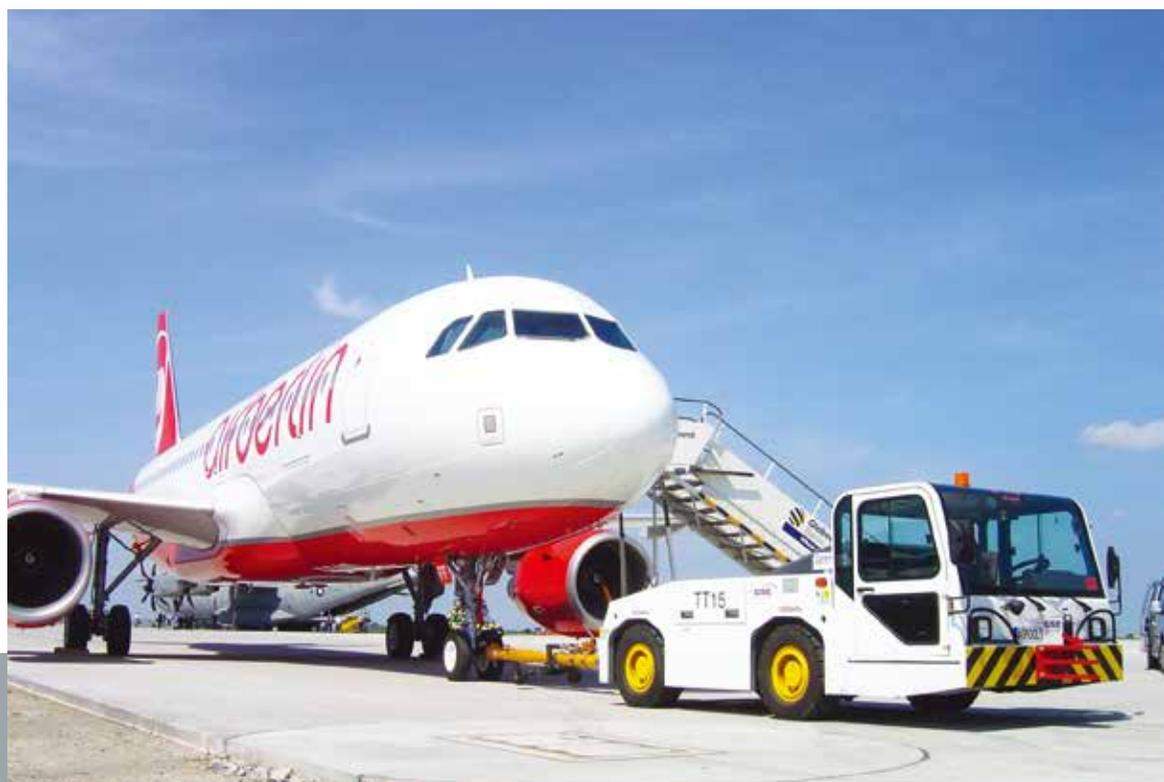
WGQY Series Aircraft Tow Tractor-WGQY15, WGQY27
Weihai Guangtai Airport Equipment Co., Ltd.
ZY(J)7(M) Sealed Type Electro-Hydraulic Turnout Machine
TAIYUAN CR JINGFENG EQUIPMENT TECHNOLOGY CO., LTD.
China - Alashankou/Khorgos - Europe Full Range Transportation (Mala/Hamburg/Duisburg/Budapest, etc.)
Shenzhen Neptune Logistics Co., Ltd.