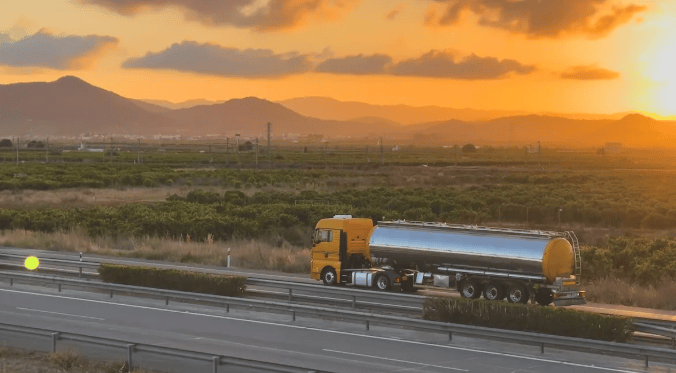
Gulf Crude STS Transfers Extend to India, VLCC Freight Rates Exceed $1 Million per Day
en.Wedoany.com Reported - Ship-to-ship (STS) transfers of Gulf crude have extended to the Gulf of Kutch off India's west coast. The waters off Oman and the UAE originally used for handovers after the Strait of Hormuz are already full, and two Very Large Crude Carriers (VLCCs) recently transferred Gulf crude to other supertankers locally, with the receiving vessels subsequently sailing to Singapore and South Korea.
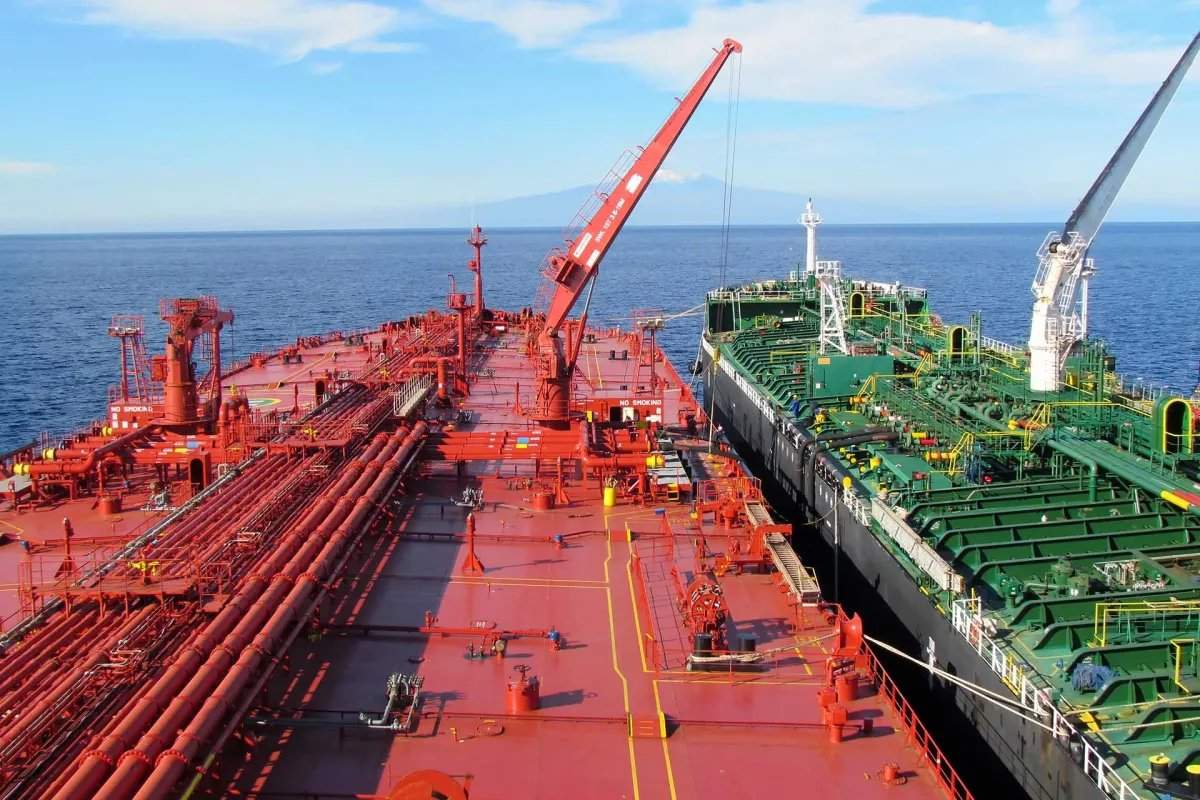
The handover system that Gulf exporters relied on during the war is becoming slower and more expensive. Vortexa estimates that transferring a full VLCC cargo now takes about five to six days, making STS operations one of the largest sources of delay on the Gulf-to-Asia route. Houthi threats to Red Sea shipping have pushed more Saudi crude back toward the Hormuz route, driving up transfer volumes, and VLCC freight rates now exceed $1 million per day.
Iraq's marketing arm Somo has begun offering Basrah crude for ship-to-ship pickup near Oman, moving the handover outside the Gulf, even though most of Iraq's export system still depends on the Strait of Hormuz.
Indian refiners have taken the opposite approach, sending their own tankers into the strait to lift cargoes. Indian Oil, Reliance, Bharat Petroleum and HPCL-Mittal recently bought Iraqi crude on a free-on-board (FOB) basis, meaning the buyer must arrange and pay for shipping. Under the new model, Sinokor and Dynacom have won tanker tenders.
This shift reverses the caution refiners showed in the early days of the war. India's crude imports directly linked to Hormuz fell from nearly 2.8 million barrels per day in February to just 179,000 bpd in May, while imports via alternative routes such as Yanbu and Fujairah more than doubled between March and May.
Steep Iraqi price cuts are a major reason for the shift. Iraq lowered its October prices by as much as $37 per barrel. For refiners, bearing the shipping risk themselves is more attractive than paying someone else to take it on.
Indian Oil has bought 2 million barrels of Iraqi crude for October loading on an FOB basis, meaning it must secure a tanker, send it into the Gulf to load, and bear the freight and transit risk on the return voyage. Reliance adopted the same arrangement earlier this year, chartering a Sinokor VLCC to load 2 million barrels of Basrah crude at a freight cost of $23 million to $25 million, compared with about $2 million before the war.
Iraq's November pricing will show whether the price cuts that drew Indian refiners back to Hormuz are continuing.
Related Products

Double-slide Triple-sealed Hot Air Isolation Door
Xi'an Yingchuan Electric Power Equipment Co., Ltd.
MESS8201-2507/5015-BN Prefabricated Liquid-cooled Energy Storage Battery Container
Xuchang Xuji Electric Science Energy Storage Technology Co., Ltd.

Prefabricated Houses and Electrical Energy Boxes
Chengdu Ruilong Machinery Manufacturing Co., Ltd.
Mineral-insulated Compact Busway (Fire-resistant Busduct)
Zhuhai Guangle Electric Busway Co., Ltd.

0.66kV Power Supply Instrument Transformer
Guangdong Sihui Instrument Transformer Works Co., Ltd.