China's Meituan Releases LongCat-2.5 Multimodal Large Model
en.Wedoany.com Reported - On November 2, China's Meituan officially released its next-generation large model LongCat-2.5. This is a native multimodal model designed for long-horizon agentic tasks, with a total parameter count of 1.6 trillion and approximately 48 billion parameters activated per token. Compared with the previous generation LongCat-2.0, the new model further enhances native visual understanding and agentic coding capabilities, focusing on complex codebase development, complete software project construction, and multi-step tasks requiring sustained execution.

LongCat-2.5 improves the model's ability to handle long-horizon tasks by adjusting training data and reinforcement learning processes. Meituan incorporated more long-horizon task trajectory data into long-sequence training and adopted large-scale long-horizon reinforcement learning, enabling the model to possess stronger continuous execution capabilities during complex software development. The research team also converted failure trajectories generated during real agent task execution into reproducible and verifiable training tasks, then supplemented training data targeting the capability gaps exposed by the model to improve execution performance in complex tasks.
For multimodal processing, LongCat-2.5 adopts a native visual understanding approach that represents visual signals as multi-level discrete tokens, enabling the model to process visual and textual inputs within a unified token framework. This design allows the model not only to understand image information but also to apply visual understanding capabilities to programming tasks, supporting application scenarios such as Visual Coding, creative design, and 3D content generation.
During the mid-training stage, Meituan employed long-context sequence training with sequences of up to 1 million tokens, accumulating trillions of tokens in training volume, and optimized memory usage, inter-card communication, and computing resource scheduling around domestic computing infrastructure. In Meituan's published long-context supervised fine-tuning tests, the optimized single-card training throughput improved by 86% compared with the distributed data parallel (DDP) baseline.
For inference, a W4A4 quantization scheme is adopted, quantizing both model expert weights and activations to 4 bits to reduce computation and data transfer overhead. Meituan's online stress tests show that, compared with the W8A8 INT8 baseline where both weights and activations use 8 bits, the new scheme improves input processing and per-token generation throughput by approximately 40%, reduces time-to-first-output by approximately 16%, and shortens the generation time per subsequent token by approximately 20%. These figures come from specific test environments published by the company and do not represent that all deployment scenarios will achieve performance improvements of the same magnitude.
Users can experience the model online through the LongCat official website, and developers can access it via the API platform. Information published by Meituan's technical team indicates that GitHub and Hugging Face versions are planned for subsequent release. Application directions for the new model include complex software development, visual programming, and creative design—tasks that require multi-step processing.
Related Products
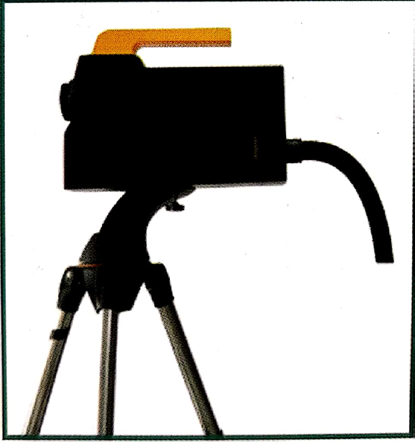

Automatic Aiming Laser Remote Obstacle Removal Robot
Pinggao Group Weihai High-Voltage Apparatus Co., Ltd.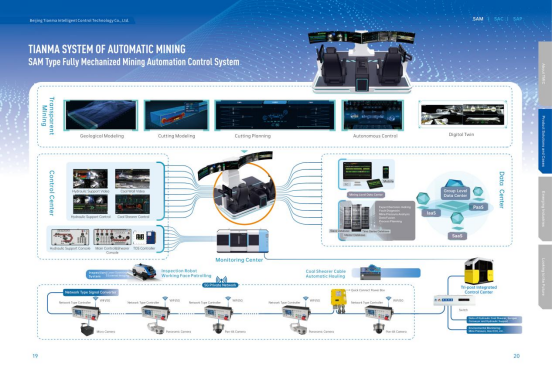
Comprehensive Mining Automation Control System
Beijing Tianma Intelligent Control Technology Co., Ltd.
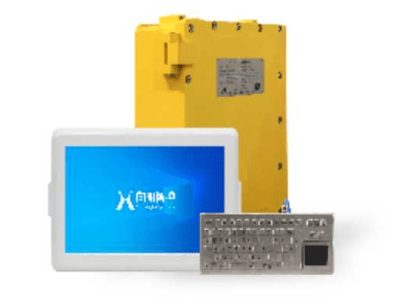
KJD127(A) Mining Explosion-Proof and Intrinsically Safe Computer
Taiyuan Xiangming Intelligent Control Technology Co., Ltd.
TWP16 P-Band Tropospheric Wind Profile Radar
China Huayun Meteorological Technology Group Co., Ltd.

MUX Series Communication Interface Device for Security and Stability Control System
Nanjing NR Electric Co., Ltd.
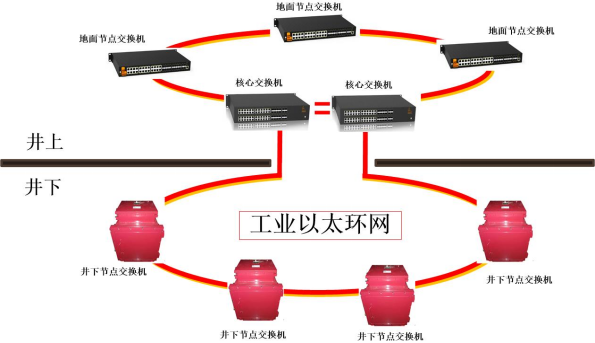
Mine Explosion-proof and Intrinsically Safe Industrial Ethernet Ring Network (10 Gigabit/Gigabit)
Chongqing Mas Sci&Tech Co., Ltd.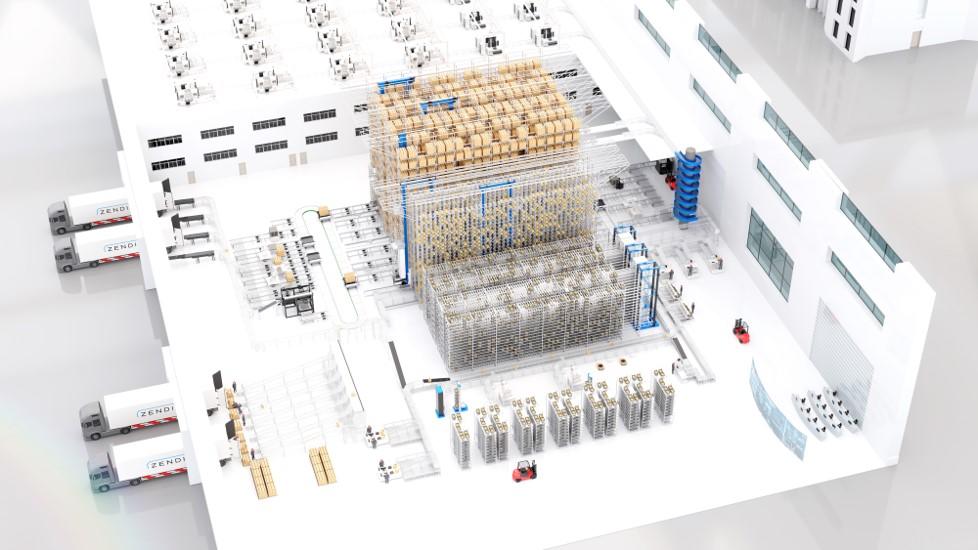
One-Stop Steward Service for the Entire Logistics System Integration Chain
Zhongding Intelligent (Wuxi) Technology Co., Ltd.