Wedoany.com Report-Aug. 19, BHP, a leading global mining company headquartered in Melbourne, Australia, announced a 14% increase in full-year net profit to $US9 billion ($A13.9 billion), but its underlying net profit fell 26% to $US10.6 billion due to weaker commodity prices. As a result, the final shareholder dividend was reduced to 60 US cents ($A0.92) per share from 74 US cents the previous year. Chief Executive Mike Henry stated: “We delivered on our full-year guidance across our suite of businesses and achieved record iron ore and copper production. Our operational results have underpinned another year of sector-leading margins and strong cash flows.”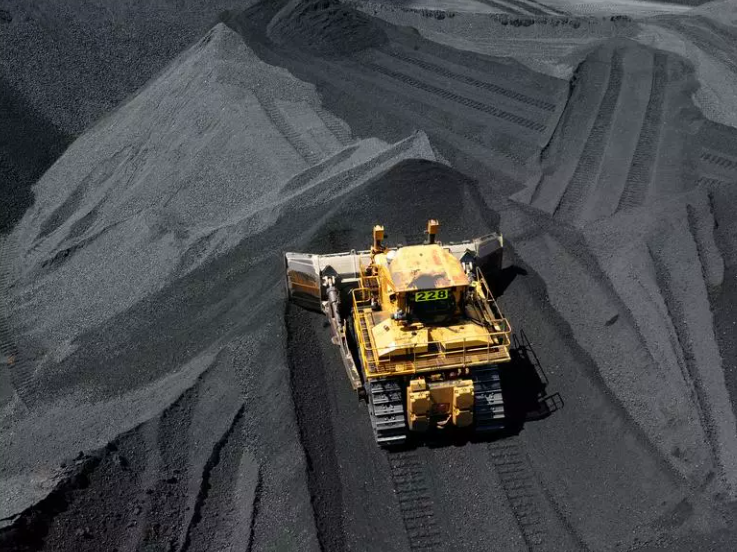
BHP has taken aim at Queensland's royalty regime, saying it might mothball coal mines in the state.
Despite record production in iron ore and copper, BHP’s revenue dropped by $US4.4 billion, driven by lower coal and iron ore prices, though stronger copper prices provided some offset. Underlying earnings from copper reached a record $US12.3 billion, contributing 45% to group earnings, while overall earnings before interest, tax, depreciation, and amortization declined 10% to $US29 billion.
Mike Henry noted: “While economies around the world continue to navigate policy uncertainty, China and India again demonstrated resilient economic and commodity demand growth in the first half of this year. Our commodities have large markets, resilient demand and steep cost curves. The world is going to need a lot more steelmaking materials, a lot more copper and a lot more potash.” He also highlighted the full-year dividend payout of $US5.6 billion, saying: “This is backed by a strong balance sheet, lower than expected capital spend and confidence in the long-term trajectory of our business.”
BHP flagged potential challenges with Queensland’s royalty regime, introduced in 2022, which could lead to pausing operations at some of its five coal mines under the BHP Mitsubishi Alliance, which employs over 10,000 people. The company stated: “With no change to the ongoing negative impacts of extreme royalty rates, we will maintain our existing position of not investing in any further growth at BMA. If low coal prices persist, options to pause lower margin areas of our operational footprint will be considered.”
The company maintained its exploration expenditure guidance at $US11 billion and invested $US2.1 billion for a 50% stake in the Vicuna joint venture, a significant copper deposit. Kaan Peker from RBC Capital Markets commented: “The company is balancing its shift toward growth (namely in copper), and is continuing to pay compelling dividends.” BHP’s shares rose 1.5% to $42.07 in early afternoon trading, reflecting positive investor response.
This performance underscores BHP’s focus on operational resilience and strategic growth in key commodities like copper, supporting long-term economic contributions through wages, taxes, and supplier payments totaling nearly $US47 billion globally.