Amazon Says AWS Cloud Service Is Back to Normal After Outage Disrupts Businesses Worldwide
Wedoany.com Report-Oct. 21, Amazon.com announced that its cloud service, Amazon Web Services (AWS), resumed normal operations on Monday afternoon after a major internet outage that disrupted thousands of websites worldwide. The disruption affected popular applications including Snapchat, Reddit, Venmo, and Zoom, causing widespread connectivity issues from London to Tokyo. Amazon stated that while all AWS services had returned to normal by 3 p.m. PT (2200 GMT), some, such as AWS Config, Redshift, and Connect, were still processing a backlog of messages that would take several hours to clear.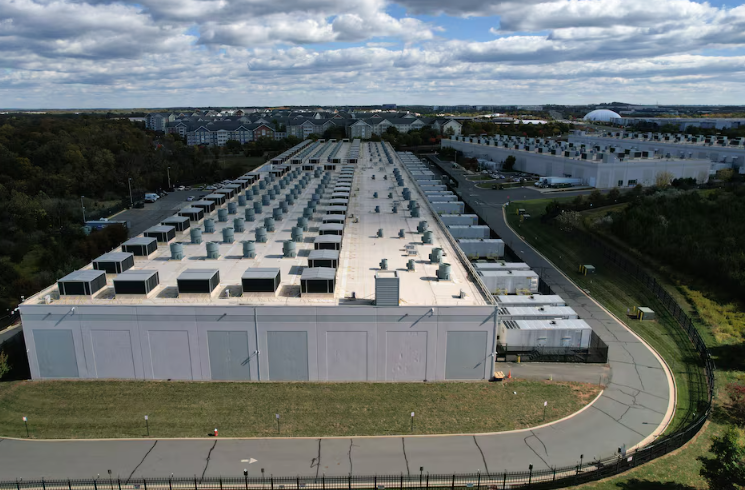
According to Amazon (AMZN.O), the outage originated from an internal subsystem that monitors the health of network load balancers within its “Elastic Compute Cloud” (EC2) network. These load balancers distribute traffic across multiple servers to maintain stable performance. The problem interfered with the Domain Name System (DNS), which prevented certain applications from locating the correct address for AWS’s DynamoDB API—a cloud database used to store user and operational data.
The affected data center, known as US-EAST-1, is located in northern Virginia and serves as AWS’s oldest and largest hub for web services. This location has previously experienced outages in 2020 and 2021. Monday’s incident marked at least the third time in five years that issues at US-EAST-1 led to a major internet disruption. AWS confirmed on its status page that the outage originated from this site.
The outage was one of the most significant since the CrowdStrike malfunction in 2024, which had impacted hospitals, banks, and airports. The event underscored the dependence of global systems on a limited number of large cloud providers. AWS, which supplies computing power, data storage, and digital infrastructure to governments, companies, and individuals worldwide, is the largest cloud provider globally, followed by Microsoft Azure and Google Cloud.
Ken Birman, a computer science professor at Cornell University, emphasized the need for stronger fault tolerance in software design. He said: “When people cut costs and cut corners to try to get an application up, and then forget that they skipped that last step and didn’t really protect against an outage, those companies are the ones who really ought to be scrutinized later.” Birman noted that AWS offers tools to mitigate such risks, and developers can use multiple cloud providers to enhance system resilience.
Jake Moore, global cybersecurity advisor at ESET, commented: “This outage once again highlights the dependency we have on relatively fragile infrastructures.” Similarly, Nishanth Sastry, director of research at the University of Surrey, said the incident demonstrated the risk of large companies depending heavily on a single service.
In the United Kingdom, the outage affected Lloyds Bank, Bank of Scotland, and telecommunications companies Vodafone and BT, as well as the website of the national tax and customs authority HMRC. According to Downdetector, operated by Ookla, over four million users worldwide reported difficulties caused by the AWS disruption. Ryan Griffin, U.S. cyber practice leader at McGill and Partners, added: “For major businesses, hours of cloud downtime translate to millions in lost productivity and revenue.”
Related Products







Conveyor Belt Intelligent Monitoring System
LUO YANG WIRE ROPE INSPECTION TECHNOLOGY CO., LTD.
TWP16 P-Band Tropospheric Wind Profile Radar
China Huayun Meteorological Technology Group Co., Ltd.
One-Stop Steward Service for the Entire Logistics System Integration Chain
Zhongding Intelligent (Wuxi) Technology Co., Ltd.
KJD127(A) Mining Explosion-Proof and Intrinsically Safe Computer
Taiyuan Xiangming Intelligent Control Technology Co., Ltd.
Flat Portable Satellite Terminal 0.35m Aperture Manual Portable Terminal
China Starwin Science & Technology Co., Ltd.