Chinese-Kazakh Hybrid Wheat Variety Helps Kazakhstan Achieve Bumper Harvests
Wedoany.com Report-Dec.10, A high-yield hybrid wheat variety developed through joint research by scientists from China and Kazakhstan is contributing to stronger harvests in Kazakhstan, a major global supplier of premium wheat.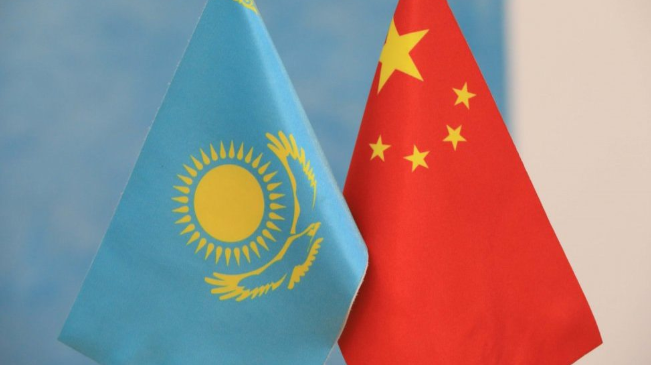
Kazakhstan plants around 13 million hectares of wheat each year, with average yields historically around 1,200 kilograms per hectare. In 2016, Northwest Agriculture and Forestry University in Yangling, China, began introducing advanced Chinese wheat varieties to Central Asia, including Kazakhstan, to share agricultural technology and enhance regional productivity.
"This year, we have planted more than 200 Chinese wheat breeding materials in Kazakhstan, and two of those lines perform very well," said Chen Liang, professor at the College of Agronomy of Northwest Agriculture and Forestry University.
Early trials faced adaptation challenges due to differences in climate and soil conditions. To address this, researchers launched a decade-long cross-breeding program combining the high-yield potential of Yangling wheat (up to 7,500 kilograms per hectare in China) with the superior grain quality of Kazakh varieties, known for high protein and wet gluten content.
"It's time for us to reap what we sowed ten years ago. Today, we've finalized several mature new wheat breeding lines. More importantly, we've inspired and trained a group of young local scientists, teaching them how to use modern biotechnology in breeding," said Li Xuejun, chairman of the Silk Road Wheat Innovation Alliance and professor at the university.
Recent field results show the new hybrid varieties delivering over 20 percent higher yields per hectare compared to traditional local strains while maintaining excellent quality characteristics.
"These varieties perform just as well as, or even better than our local crops. More importantly, their quality traits are attractive and outstanding, making them perfectly suited for our region's agricultural production system," said Altyn Shayakhmetova, dean of the Faculty of Agrotechnology at Manash Kozybayev North Kazakhstan University.
The improved seeds are expected to increase farm incomes and support expanded wheat production in Kazakhstan.
"If we can increase yields on Kazakhstan's vast lands and help to transform the region into a 'global granary,' we can boost exports and raise local farmers' incomes. This represents a truly win-win cooperation," said Zhang Zhengmao, honorary chairman of the Silk Road Wheat Innovation Alliance and professor at Northwest Agriculture and Forestry University.
The successful collaboration demonstrates the value of long-term international agricultural research partnerships in developing resilient, high-performing crop varieties tailored to local growing conditions while preserving essential quality standards for global markets.
Related Products




4HS-8 High-efficiency Peanut Inverted-laying Harvester
Hebei Yongfa Hongtian Agricultural Machinery Manufacturing Co., Ltd.
714CD Series C-Band Weather Radar
Chengdu Zhongdian Jinjiang Information Industry Co., Ltd.

Industrial and Commercial Point-Type Gas Detector
Jinan Benan Technology Development Co., Ltd.