Chinese Team Develops Micro LED Optogenetics Brain-Computer Interface Technology
Wedoany.com Report on Feb 10th, Recently, the important journal in the field of neurobiology, "Neuron," published online a research paper titled "A mesoscale optogenetics system for precise and robust stimulation of the primate cortex." This research was completed through collaboration between Li Hao's team at the Lingang Laboratory and the research group led by Liu Zhen at the Chinese Academy of Sciences' Center for Excellence in Brain Science and Intelligence Technology. The team successfully developed a novel ultra-high-channel brain-computer interface system based on mesoscale optogenetics, achieving long-term, precise, and stable information "writing" in the cerebral cortex of primates for the first time. This marks a critical step forward for brain-computer interface technology towards high precision and high stability.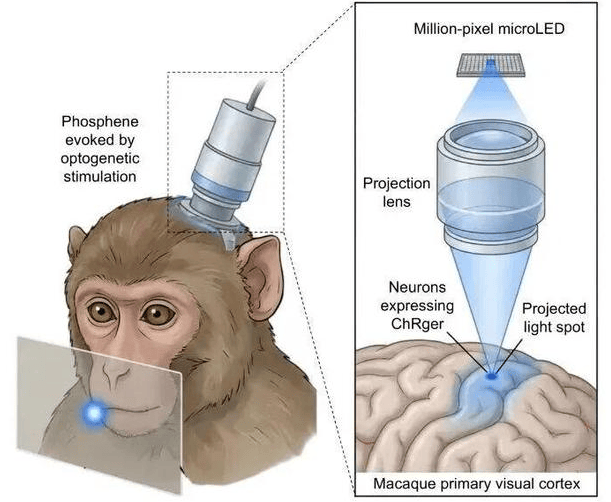
In brain-computer interface research, how to precisely and reliably input information into the brain has always been a core challenge. Traditional stimulation techniques often face issues such as limited precision and insufficient stability when applied to the primate cortex. To address this, the research team innovatively employed a million-pixel-level Micro LED panel as the light stimulation carrier, constructing a cortical stimulation system with mesoscale resolution. This system can achieve independent control of single pixels over a centimeter-scale range, elevating the number of stimulation channels to a new order of magnitude and significantly enhancing spatial precision and regulatory flexibility over neural activity.
In experiments with non-human primates, the system successfully induced precise "phosphenes" that conform to the topological structure of the retina—controllable visual perceptions generated through light stimulation. Long-term experimental data show that the system maintained highly stable stimulation performance over an observation period of up to one year, with no significant attenuation or tissue damage observed, verifying its biocompatibility and operational safety. This achievement provides an efficient information writing strategy for brain regions with distinct functional column structures, such as the primate visual cortex, and lays an important technical foundation for the future development of high-performance visual prostheses and brain-computer interface systems.
Related Products




Industrial and Commercial Point-Type Gas Detector
Jinan Benan Technology Development Co., Ltd.

MUX Series Communication Interface Device for Security and Stability Control System
Nanjing NR Electric Co., Ltd.
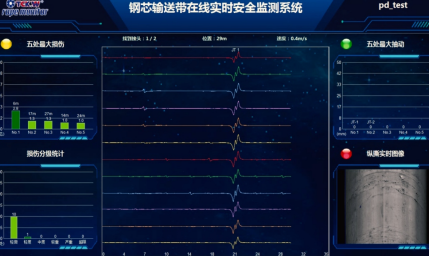
Conveyor Belt Intelligent Monitoring System
LUO YANG WIRE ROPE INSPECTION TECHNOLOGY CO., LTD.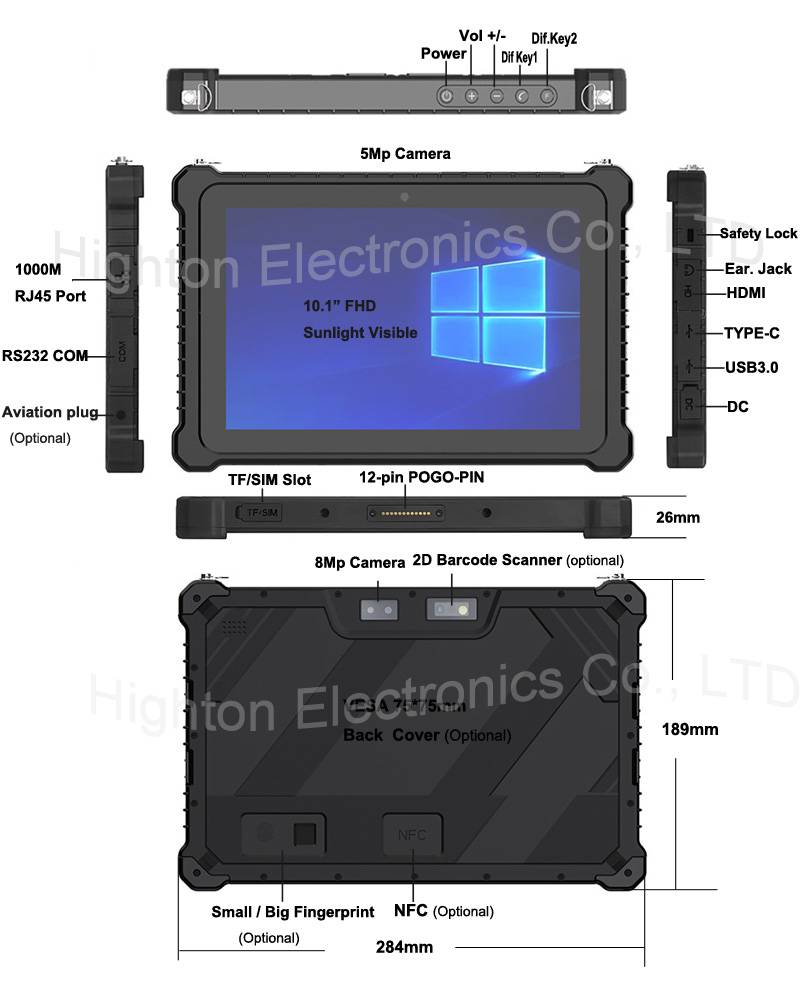
Hot Selling 10 Inch Intel N5100 I5 I7 FHD 8 +128GB 16+256GB Win10 Pro Win11 Pro 4G 5G Rugged Tablet PC Pad with NFC Barcode
Highton Electronics Co., Ltd.

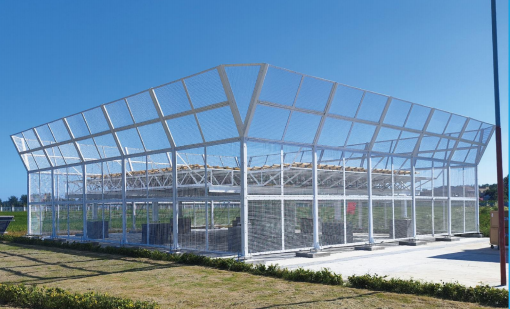
TWP16 P-Band Tropospheric Wind Profile Radar
China Huayun Meteorological Technology Group Co., Ltd.