3D printing technology is seen as a potential solution to achieve mass customization, promising to elevate the efficiency of single-item production to near mass manufacturing levels. Although this goal has not yet been fully realized, the technology is propelling the manufacturing industry forward.
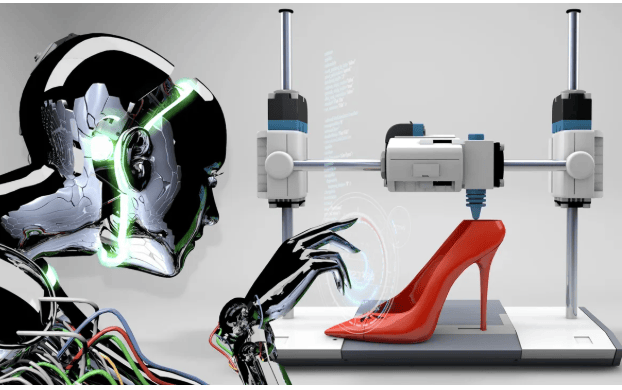
Footwear and fashion brands have experimented with 3D printing for years, but widespread adoption still faces obstacles, including insufficient cross-industry understanding, high costs, limited production capacity, and uncertain consumer demand. However, 3D printing supports on-demand manufacturing and customization while reducing inventory risks, which is attractive to the footwear industry, which produces 20 billion pairs annually.
Ben Wynne, CTO of Intrepid Automaton, shared insights on the progress of 3D printing in footwear manufacturing. He stated, "The 3D printing industry is still constrained by a prototyping pricing model. Comparing the cost of traditional nylon to 3D-printed nylon, or polyurethane foam to direct-print materials, reveals a significant gap. It's a cyclical issue—only a few million pairs of shoes are 3D printed each year, compared to over 20 billion produced traditionally."
Intrepid focuses on addressing fundamental issues such as speed, cost, consistency, reliability, and labor requirements. Wynne emphasized that for domestic footwear production, automation is key, not reliance on manual labor. The company utilizes robotics, artificial intelligence, and big data for quality tracking, develops specialized materials, and designs industrial hardware capable of long-term operation.
Regarding material handling, Wynne noted that the real opportunity lies in innovative printing tools. Traditional printing molds might take 24 hours to complete one component, with high material costs. Intrepid's technology can print four complete mold sets in seven hours, significantly increasing throughput, enabling mass production, and shortening design cycles.
Concerning the customer base, Wynne's strategy is to focus on equipment manufacturers rather than niche producers. Through collaboration, they aim to provide new capabilities to footwear OEMs, optimizing materials, equipment, and automation to ensure compatibility with existing infrastructure.
Discussing customer demand, Wynne said, "Ideally, 3D printing should be viewed as a standard tool, but the reality is that the need to compress product development cycles and achieve faster time-to-market drives adoption. Additive manufacturing can save on tooling costs and lead times, allowing designers to launch new products within weeks." He also mentioned that printed molds support limited production and engineered scarcity, helping brands respond flexibly to the market.
In terms of application scope, 3D printing technology is most suitable for footwear like sneakers that use polyurethane foam, and the fashion sector also has potential due to rapid design processes. Wynne believes cross-category application is biomechanically possible.
On reducing waste, Wynne explained that material type affects recyclability, but 3D printing primarily reduces inventory by eliminating tooling delivery and storage. Adopting a just-in-time model allows for rapid response to consumer demand, enabling on-demand manufacturing.
Finally, Wynne discussed the issue of production relocation: "3D printing often focuses on decentralized manufacturing, but successful cases like the dental industry show that centralized, automated factories can achieve scale. Invisalign produces 2 million unique parts daily at its Mexican factory. Centralized infrastructure is the pathway to creating new footwear types; customization can occur at the edges, but automation is key."