Wedoany.com Report on Feb 26th, In the field of additive manufacturing, pellet-based extrusion technology is being used to produce full-scale components made from fiber-reinforced thermoplastics, such as molds, prototypes, and hull structures. This process supports the direct handling of reinforced plastic pellets, facilitating flexible component design and short development cycles. However, iterative product development generates significant production waste, including discarded prints, prototypes, and structural components, particularly during testing and validation phases, where glass fiber and carbon fiber-reinforced thermoplastics accumulate substantially.
At CEAD's Marine Application Center, industrial-grade 3D printing systems are used to manufacture large hull components. A single discarded component can weigh hundreds of kilograms, making traditional disposal methods economically and resource-inefficient. To address this, CEAD has introduced an internal shredding process to recover this production waste for further use.
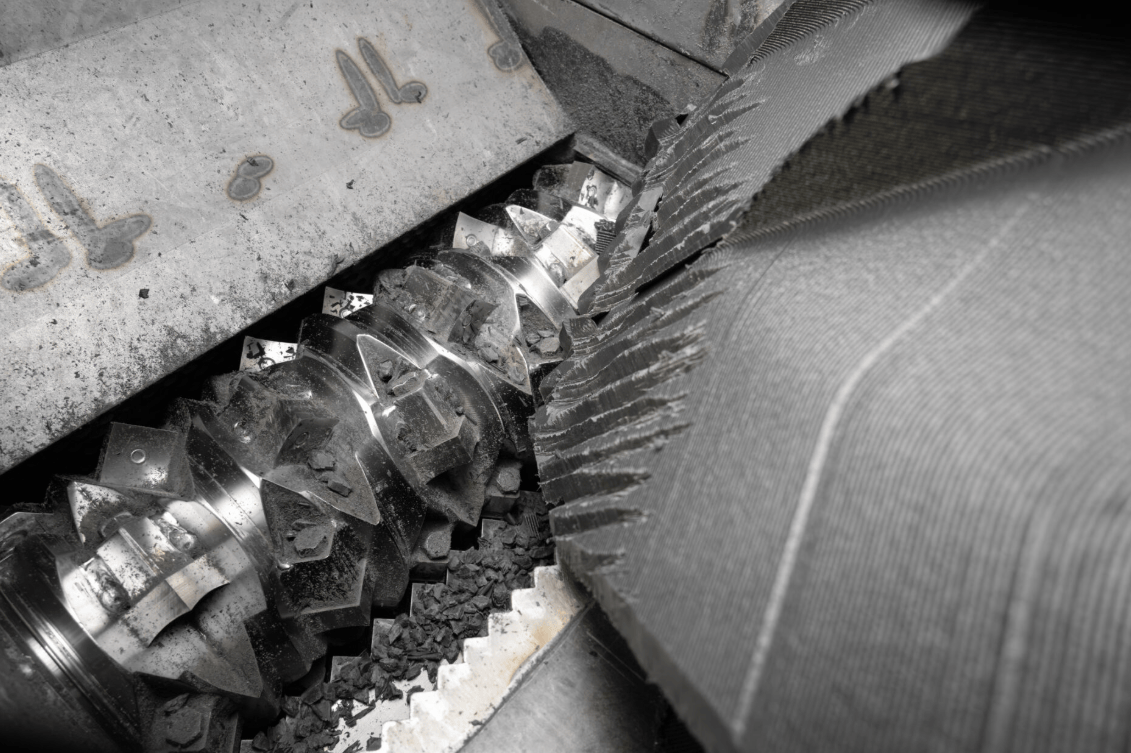
The company has installed a WLK 4 single-shaft shredder from Weima, equipped with a 10 mm screen, capable of processing reinforced thermoplastic components into uniform fragments approximately 10 mm in pellet size. The shredder is designed for high-torque operation, suitable for fiber-reinforced polymers, which impose higher mechanical demands on the cutting system and drive components.
The resulting fragments can serve as intermediate materials for reprocessing, including re-pelletization. In collaboration with R&D partners in the Netherlands, CEAD is testing the re-pelletization of shredded short fiber-reinforced composites for reuse in pellet extrusion 3D printing systems. Preliminary trials indicate that mechanically recycled material can be processed into new feedstock suitable for additive manufacturing applications.
By integrating shredding and material reprocessing into the production environment, CEAD is advancing closed-loop material workflows in large-format additive manufacturing. This approach enhances material efficiency in processing reinforced thermoplastics and supports the development of circular manufacturing strategies in industrial 3D printing, offering new pathways for sustainable practices within the additive manufacturing sector.