
As human space exploration deepens, computer scientists face new challenges: how to design distributed computing algorithms suitable for space environments? Siddhartha Jayanti, Assistant Professor of Computer Science, recently presented a significant paper at the Association for Computing Machinery (ACM) Symposium on Principles of Distributed Computing (PODC 2025), delving into this issue.
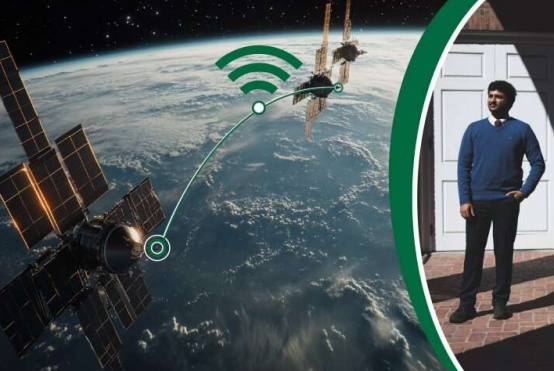
Jayanti has long been dedicated to the study of distributed computer systems. Distributed systems process large-scale tasks through the coordinated work of multiple interconnected computers. However, when these computers are deployed on spacecraft in space, the situation becomes more complex. Machines in space not only face challenges from high-speed flight but also the influence of different gravitational fields, which casts doubt on the effectiveness of traditional distributed algorithms.
Jayanti points out that the core of distributed computing lies in communication between computers. But in interstellar environments, due to astronomical distances, light propagation between planets takes minutes, resulting in asynchronous systems. In such cases, ensuring efficient and reliable data transmission between computers becomes an urgent problem to solve.
At the symposium on June 18, Jayanti's paper proposed methods for applying classical distributed algorithms to relativistic environments. Through a series of experiments, he demonstrated that if an algorithm is correct in classical settings, then in relativistic environments, every observer will agree on its correctness, although they may hold different opinions on the reasons for its correctness. This discovery lays the foundation for research on relativistic distributed systems.
Jayanti's proof is based on the principle of causality, where causes must precede effects. By establishing a concept of distributed computing causality independent of physics and combining it with relativistic causality, he provides theoretical support for the design of relativistic distributed algorithms.
As space exploration deepens, computing becomes a core tool for achieving this goal. Jayanti's research not only helps us better understand relativistic distributed systems but also provides important references for the construction of future interstellar internets. His work demonstrates that through in-depth research and continuous innovation, we can overcome the challenges posed by space environments and promote the application of distributed computing technologies in interstellar domains.