
A research team from the Korea Advanced Institute of Science and Technology (KAIST) has successfully identified high-efficiency carbon dioxide capture materials using artificial intelligence. The study, led by Professor Jihan Kim from the Department of Chemical and Biomolecular Engineering, was conducted in collaboration with Imperial College London and published in Matter.
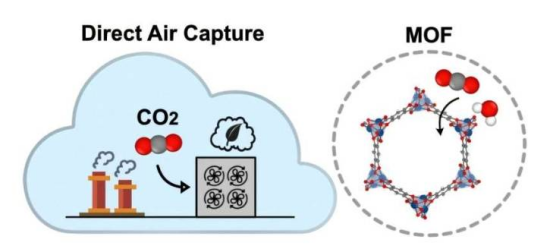
The team developed a machine learning force field (MLFF) capable of accurately predicting interactions between metal-organic framework (MOF) materials and CO₂ and water molecules with quantum mechanical precision. This system rapidly computes adsorption properties, screening over 8,000 MOF structures to identify more than 100 high-performance CO₂ capture candidates.
"Traditional methods struggle to accurately predict complex intermolecular forces," said Professor Kim. "Our MLFF technology overcomes this challenge, providing a powerful new tool for carbon capture material design." The study also identified seven key chemical descriptors influencing material performance, guiding future R&D efforts.
This breakthrough is expected to advance direct air capture (DAC) technology and improve CO₂ capture efficiency. Compared to conventional approaches, the new system discovers more potential high-performance materials with significantly faster computation.