
A research team led by Professor Sang Yup Lee from the Department of Chemical and Biomolecular Engineering at the Korea Advanced Institute of Science and Technology (KAIST) has successfully developed a new technology to produce eco-friendly plastic monomers using microorganisms. The research findings were published in the Proceedings of the National Academy of Sciences, offering a new approach to addressing the plastic pollution problem.
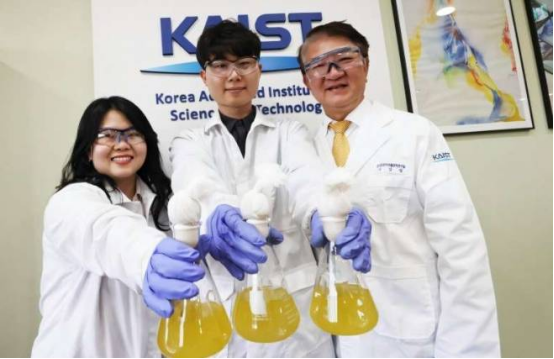
The team used systems metabolic engineering to modify Corynebacterium glutamicum, enabling it to efficiently produce pseudo-aromatic polyester monomers. This technology can generate five types of pseudo-aromatic dicarboxylic acids, such as 2-pyrone-4,6-dicarboxylic acid, and four types of pyridine dicarboxylic acids, with a record-breaking yield of 15.01g/L for 2,6-pyridinedicarboxylic acid.
"This research has developed a microorganism-based eco-friendly technology that efficiently produces aromatic-like polyester monomers," said Professor Lee. "It will help drive the bio-based monomer industry to replace the petrochemical-based industry." Compared to traditional chemical methods, microbial fermentation offers advantages such as high yield, good selectivity, and mild reaction conditions.
Through metabolic pathway optimization, the research team successfully increased the yield of 2-pyridone-4,6-dicarboxylic acid to 76.17g/L. The bioplastic monomers produced by this technology exhibit excellent physical properties and biodegradability, holding promise as alternatives to traditional plastics like PET.