
A research team led by Professor Yoshimitsu Kakuta from the Faculty of Agriculture at Kyushu University has published new findings in Nature Communications, successfully elucidating the working mechanism of the minimal tRNA-processing enzyme HARP. This discovery provides a new theoretical foundation for synthetic biology and RNA tool development.
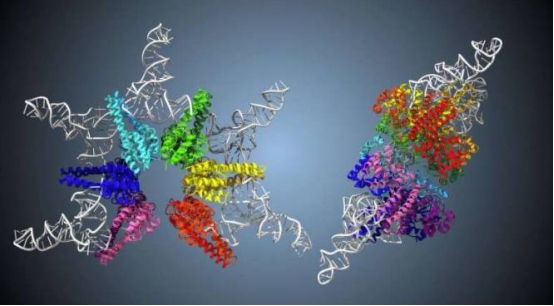
Using cryo-electron microscopy, the team obtained the first high-resolution structure of the 12-subunit HARP enzyme bound to precursor tRNA. This star-shaped complex precisely recognizes and cleaves both the 5' and 3' ends of tRNA molecules, exhibiting unique dual functionality. Professor Kakuta stated: "HARP achieves multifunctional processing of precursor tRNA through oligomerization, demonstrating an exquisite evolutionary strategy in living organisms."
Experimental results show that HARP functions like a "molecular ruler," measuring specific regions of tRNA to ensure accurate cleavage sites. Notably, the enzyme binds only five precursor tRNA molecules, with the remaining seven active sites subsequently involved in 3'-end cleavage. First author Assistant Professor Takamasa Teramoto noted: "This finding has transformed our understanding of the mode of action of the HARP enzyme."
The study not only reveals the molecular mechanism of tRNA processing in microorganisms but also offers new insights for designing artificial RNA-processing tools. The researchers believe that understanding how this compact structure achieves multifunctionality will help develop more efficient biotechnological tools. In the future, these findings may find applications in gene editing and synthetic biology.