
An international study jointly conducted by research teams from Australia, China, Japan, Singapore, and India has developed a new nanomaterial based on calcium-intercalated graphene oxide that can efficiently harvest clean drinking water from atmospheric water vapor, offering an innovative solution to global water scarcity.
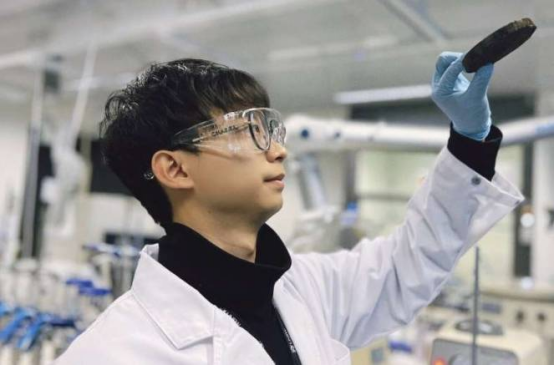
The research, led by the Australian Research Council Centre of Excellence for Carbon Science and Innovation (ARC COE-CSI), was co-directed by Associate Professor Rakesh Joshi from the University of New South Wales and Nobel laureate Sir Kostya Novoselov from the National University of Singapore. According to United Nations reports, approximately 2.2 billion people worldwide lack access to safely managed drinking water, while the ~13 trillion liters of water suspended in Earth's atmosphere (equivalent to 2,600 Sydney Harbours) represent a significant yet underutilized potential freshwater source despite being only a tiny fraction of total global water. Against this backdrop, the team has focused on developing technology to directly extract drinking water from the air.
The core innovation of the new nanomaterial lies in intercalating calcium ions into graphene oxide. Graphene oxide is a single-atom-thick carbon lattice functionalized with oxygen-containing groups, giving it excellent water-absorbing properties. The team discovered that when calcium ions are inserted into the oxygen layers of graphene oxide, the synergistic interaction between calcium and oxygen dramatically enhances water uptake. Experimental data show that graphene oxide alone adsorbs amount X of water, calcium alone adsorbs amount Y, yet calcium-intercalated graphene oxide achieves adsorption far greater than X+Y — a true "1+1>2" synergistic effect. First author Carlos Ren (Xiaojun Ren) from UNSW explained that this enhancement arises because the coordination between calcium and oxygen alters the hydrogen-bond strength between water and calcium, making the bonds stronger and thereby significantly boosting water uptake capacity.
To further optimize performance, the team transformed the calcium-intercalated graphene oxide into an aerogel form. Aerogel, one of the lightest known solid materials, is filled with micro- to nanoscale pores that vastly increase surface area, enabling faster water adsorption than standard graphene oxide. At the same time, its sponge-like structure simplifies water release — desorption is achieved simply by heating the system to around 50°C, requiring extremely low energy. Co-author Professor Daria Andreeva emphasized that this design combines high efficiency with sustainability.
The study also utilized molecular simulations on Australia's National Computational Infrastructure (NCI) supercomputer to elucidate the synergistic mechanism between calcium and graphene oxide. The computational team led by Professor Amir Karton from the University of New England discovered through modeling that calcium ion intercalation not only strengthens hydrogen bonding but also optimizes water adsorption pathways on the material surface, providing a theoretical foundation for designing even more efficient atmospheric water harvesting systems.
Although the technology remains in the fundamental research stage, it has already attracted industry attention. The team is working with partners to scale up the technology and develop prototype devices for field testing. COE-CSI Director Professor Liming Dai noted that the research reveals fundamental scientific principles of the water adsorption process — particularly the role of hydrogen bonding — and that this knowledge will provide sustainable freshwater solutions for the 2.2 billion people worldwide facing water shortages, demonstrating the societal value of multinational scientific collaboration.
Published in the Proceedings of the National Academy of Sciences (PNAS), the results are the fruit of close collaboration among research teams from Australia, China, Japan, Singapore, and India, embodying the spirit that science knows no borders. As the technology matures, this new nanomaterial is poised to become a key tool in addressing the global water crisis.