
The path to practical quantum computers has hit a critical obstacle: limited error-correction capability. Verifying the accuracy of quantum computations still relies on classical computer simulations, a task that becomes extraordinarily difficult due to the complexity of quantum systems. Now, researchers from Chalmers University of Technology (Sweden), University of Milan (Italy), University of Granada (Spain), and the University of Tokyo (Japan) have, for the first time, proposed a method to accurately simulate specific fault-tolerant quantum computations, opening a new route toward reliable quantum computers. The results have been published in Physical Review Letters.
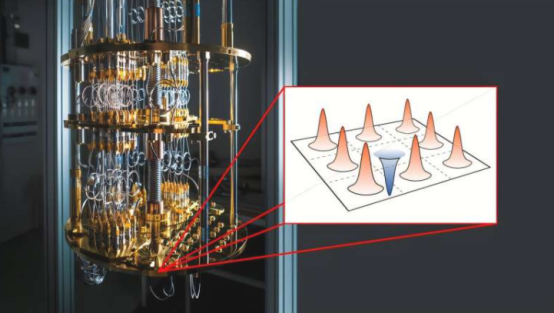
Although quantum computers hold immense potential for solving complex problems, qubits are extremely sensitive to environmental disturbances; even minor noise can cause computational errors or collapse the quantum state. Classical computers can correct errors rapidly using mature techniques, but quantum systems remain unreliable due to the lack of fault tolerance. The fault-tolerant quantum computing studied by the team distributes information across multiple subsystems via encoding to detect and correct errors. Bosonic codes such as the GKP (Gottesman-Kitaev-Preskill) code are widely used because they reduce noise sensitivity, yet their mathematical complexity has made classical simulation practically impossible until now.
"We have discovered a simulation method that previously didn't work, but now enables us to verify quantum computations using fault-tolerant error-correcting codes — something essential for building powerful quantum computers," said first author Cameron Calcluth. The algorithm developed by the team exploits the properties of the GKP code and, by creating new mathematical tools, successfully encodes quantum information into multiple energy levels of a vibrating quantum mechanical system, overcoming the simulation barrier. "The quantum-mechanical nature of the GKP code makes classical simulation extremely difficult, but the new method dramatically improves efficiency," added co-author Giulia Ferrini.
This breakthrough resolves a long-standing simulation challenge in quantum research and provides a reliable tool for testing and verifying the correctness of quantum computations. Ferrini emphasized: "The new approach opens entirely new avenues for simulating quantum computing and is crucial for building stable, scalable quantum computers." As the technology advances, quantum computers are expected to trigger revolutionary changes in fields such as medicine, energy, and cryptography.