
Since the 2011 Fukushima Daiichi Nuclear Power Plant accident, operators have continuously treated cooling water using the Advanced Liquid Processing System (ALPS) to remove radioactive substances except tritium. Because tritium is incorporated into water molecules and is difficult and costly to separate, ALPS-treated water has accumulated and been stored on-site. With storage space running out, the Japanese government announced in 2021 a plan to discharge the treated water into the ocean via an underwater tunnel. The discharge began in August 2023 and is expected to continue until around 2050.
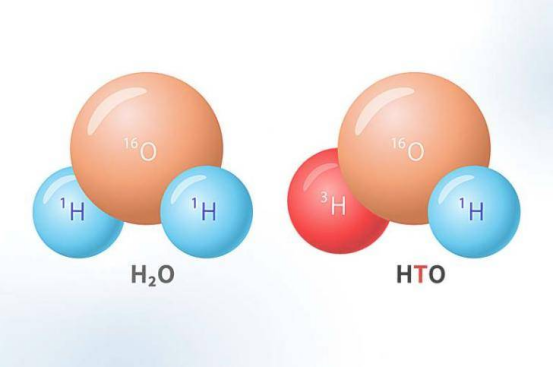
A new numerical simulation study conducted jointly by The University of Tokyo's Institute of Industrial Science and Fukushima University found that the increase in Pacific Ocean tritium concentration due to the ALPS-treated water discharge is approximately 0.1%, which is below the background tritium levels of 0.03–0.2Bq/L observed both near the release site and farther away. This value is below detection limits, far lower than the World Health Organization's international safety standard of 10,000Bq/L, and consistent with seawater tritium monitoring results during the discharge period. Lead author Alexander Kaoukin noted that while previous studies have examined the radiological impact of ALPS-treated water discharge, none had conducted long-term global ocean simulations based on realistic release scenarios that also account for long-term factors such as global warming.
This global ocean simulation also investigated the effects of ocean circulation changes caused by global warming and fine-scale ocean eddies on the spatiotemporal distribution of tritium released from the treated water. Although climate change and eddy currents accelerate the movement of tritium in the ocean, tritium concentrations in the discharged ALPS-treated water remain extremely low. Maxim Gusev from Fukushima University's Institute of Environmental Radioactivity stated that the simulation results show the anthropogenic tritium from the ALPS-treated water discharge has a negligible impact on overall ocean tritium concentrations. The study helps establish models for understanding the movement of tritium as tritiated water molecules in both water vapor and seawater, providing strong support for future research on precipitation patterns, atmospheric circulation, and ocean circulation.