
A research team from the Max Planck Institute for Medical Research has successfully developed a molecular recorder called Kinprola that enables spatiotemporal precision in monitoring protein kinase activity. This technology provides a new tool for studying cellular heterogeneity and in vivo kinase dynamics, with results published in Nature Chemical Biology.
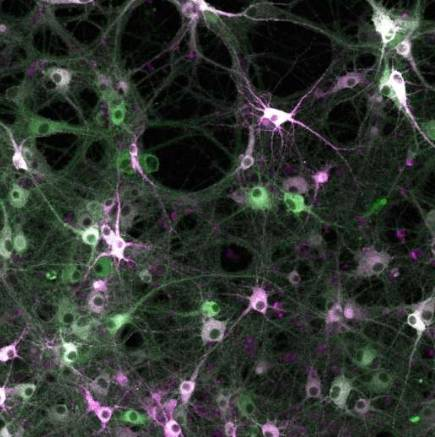
Kinprola is designed based on a split-HaloTag protein recombination mechanism: when a specific kinase is activated, a fluorescently labeled substrate selectively tags the target protein. The system's unique feature is that kinase activity determines labeling intensity, while substrate treatment duration controls recording length. The team has successfully built recording systems for four kinases, including protein kinase A (PKA).
"Traditional optical imaging struggles to monitor kinase activity in large cell populations or deep tissues," said co-lead investigator Sun De'en. Kinprola converts transient kinase signals into stable fluorescent marks via a phosphorylation-dependent molecular switch. Researchers can flexibly start or stop recording by adding or washing away the substrate, and subsequent analysis can be performed using techniques such as flow cytometry.
In animal experiments, Kinprola successfully recorded drug-induced PKA activity changes in the mouse brain. This technology overcomes the spatiotemporal limitations of existing methods and opens new avenues for studying the mechanisms of kinase-related diseases. The research team emphasized that Kinprola's modular design makes it adaptable to the study of different kinases.