
A research team from the Royal College of Surgeons in Ireland (RCSI) has developed an innovative 3D-printed implant capable of delivering precisely targeted electrical stimulation to spinal cord injury sites, opening a new pathway for nerve damage repair. The findings have been published in Advanced Science. Spinal cord injuries often result in severe consequences such as paralysis and loss of sensation. In Ireland alone, more than 2,300 people live with spinal cord injuries, and there is currently no effective repair method. However, therapeutic electrical stimulation has shown promise in promoting nerve cell regeneration.
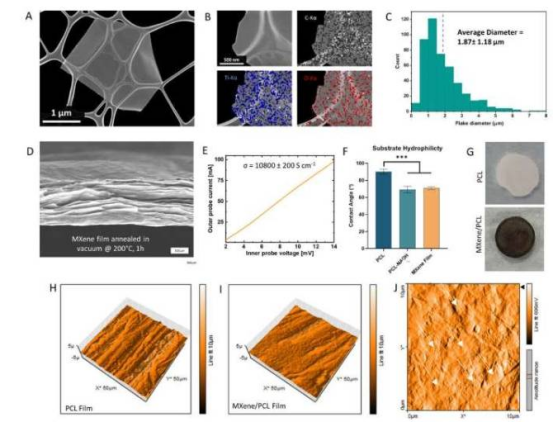
Professor Fergal O'Brien, RCSI Vice President for Research and Innovation, stated: "Regenerating neurons after spinal cord injury has always been challenging, but our conductive biomaterial can deliver electrical stimulation directly to the injury site, helping the body repair damaged tissue." The study was led by researchers from RCSI's Tissue Engineering Research Group (TERG) and the Amber Centre for Advanced Materials and BioEngineering Research in Ireland. Using ultra-thin nanomaterials from Trinity College Dublin's School of Chemistry and AMBER, they integrated these materials into a soft gel-like structure via 3D printing.
The resulting implant mimics the human spinal cord structure, featuring a fine mesh of tiny fibers that effectively conducts electric current to human cells. Laboratory tests showed that the implant efficiently delivers electrical signals to neurons and stem cells, significantly enhancing their growth capacity. The team also found that adjusting the fiber arrangement within the implant further improves its effectiveness. Dr. Ian Woods from TERG said: "These 3D-printed materials allow us to modulate how electrical stimulation is delivered, controlling regeneration and potentially leading to a new generation of medical devices for traumatic spinal cord injury. Moreover, this technology could also be applied to cardiac, orthopedic, and neurological treatments."
RCSI and AMBER researchers collaborated with the Irish Rugby Football Union Charitable Trust (IRFU-CT), forming an advisory panel to guide the project. Dr. Woods added: "The panel's expertise helped us deeply understand the lived experience of spinal cord injury patients, treatment priorities, and emerging therapies. We engage regularly to share insights, ideas, and results."