
A UK scientific team has published a groundbreaking study in Nature Communications, providing the first confirmation that a liquid envelope exists on the surface of mitotic chromosomes. This structure imparts unique mechanical properties to chromosomes, allowing them to repel one another like "bumper cars" during cell division and prevent DNA damage. The collaborative research, conducted by the University of Nottingham, the University of Glasgow, and the University of Kent, offers a completely new perspective on the mechanisms of cell division.
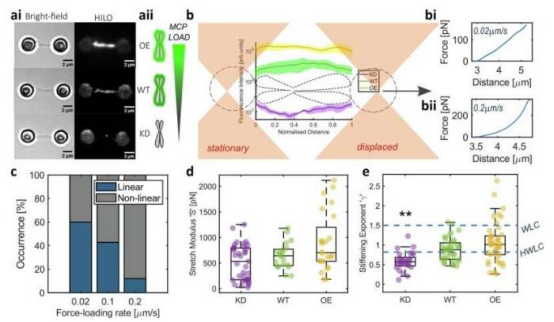
Using novel optical tweezers technology to perform mechanical tests on individual chromosomes, the team discovered that the chromosome peripheral envelope (MCP) exhibits clear liquid-like characteristics. Lead researcher Dr. Daniel Booth explained: "When slow pulling force is applied, chromosomes behave elastically; when stretched rapidly, they display viscoelasticity — a dual-phase mechanical behavior similar to stretching pizza dough." Experiments confirmed that this liquid envelope, organized by the cancer marker protein Ki-67, effectively prevents abnormal chromosome clumping and ensures the normal progression of cell division.
The study reveals three protective functions of the MCP:
Mechanical buffering: The liquid layer absorbs impact forces generated by cytoplasmic flows
Anti-adhesion: Keeps chromosomes at proper distances, preventing erroneous recombination
DNA protection: Reduces the risk of genetic material damage caused by mechanical stress
Particularly striking is the observation that when the envelope was artificially removed, chromosomes immediately exhibited abnormal aggregation, leading to failed cell division. Co-author Professor Amanda Wright noted: "This liquid envelope is likely a sophisticated protective mechanism evolved in eukaryotes, and its dysfunction may be closely linked to tumorigenesis."
The discovery opens new avenues in cancer research. The team's next steps will focus on:
Variations in the physical properties of the MCP across different tumor types
The relationship between Ki-67 protein expression levels and chromosome mechanical behavior
The potential for developing novel anticancer drugs targeting the MCP