
A research team from Northwestern University has published an innovative breakthrough in Nature Chemistry, developing a new method to integrate metal-sulfur active sites into metal-organic frameworks (MOFs). The study, co-led by Professor Omar K. Farha and Professor Laura Gagliardi, offers fresh ideas for optimizing catalytic reactions.
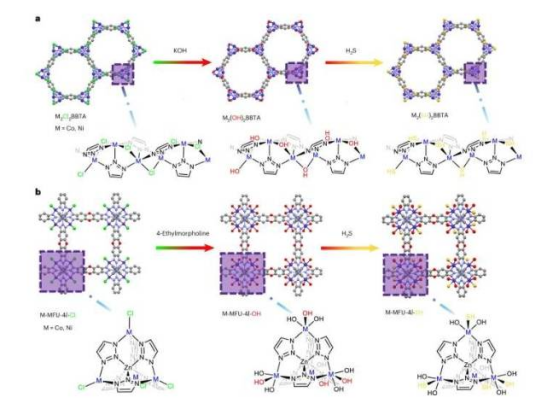
Through a multi-step chemical transformation, the team successfully introduced sulfur-based active sites without disrupting the MOF structure. First author Haomiao Xie stated: "This approach fills a gap in creating enzyme-like models within stable materials." Experiments showed that sulfur-containing MOFs significantly outperform traditional MOFs in hydrogenation catalysis, with sulfur ligands effectively lowering the hydrogen activation energy barrier.
The technology combines advanced characterization techniques such as single-crystal X-ray diffraction and electron diffraction analysis, confirming the stability of the framework structure. The researchers plan to extend this method to a broader range of MOFs and explore its potential in complex catalytic reactions, providing more efficient and environmentally friendly solutions for industrial catalysis processes.