
A study led by Johns Hopkins University researchers has achieved a transformative advance in surgical robotics. A robot named Transformer-Hierarchy (SRT-H) has, for the first time, performed a lengthy cholecystectomy on a highly realistic patient model (pig cadaver) without human assistance, demonstrating skill comparable to that of an experienced human surgeon.
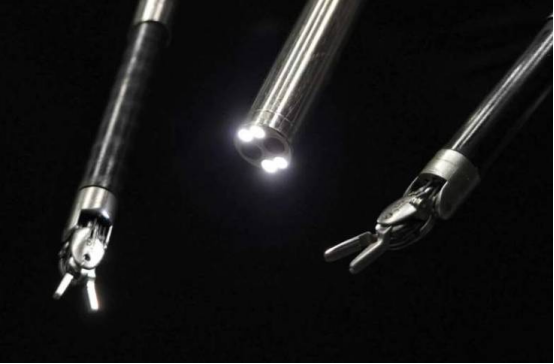
During the procedure, SRT-H remained composed, responding to verbal team commands and learning in a manner similar to a novice surgeon under mentorship. Even when confronted with real-world medical emergencies and inconsistent anatomy—including deliberate challenges such as changing the robot's starting position or adding blood-like dye to alter the appearance of the gallbladder and surrounding tissue—it adapted perfectly in real time, adjusting to individual anatomical variations, making immediate decisions, and self-correcting when unexpected situations arose.
Medical robotics expert Axel Krieger stated that this advance moves robots from merely executing specific surgical tasks toward truly understanding surgical procedures, bringing them closer to clinically viable autonomous systems capable of operating in the chaotic and unpredictable environment of real patient care. In 2022, Krieger's Smart Tissue Autonomous Robot (STAR) performed the first autonomous laparoscopic surgery on a living animal (pig), but required specially marked tissue, a highly controlled environment, and a strictly pre-planned sequence—essentially teaching the robot to drive along a carefully drawn route. The new system, by contrast, is like teaching a robot to drive on any road under any conditions and intelligently react to whatever it encounters.
SRT-H employs the same machine-learning architecture as ChatGPT, offering interactivity, the ability to respond to voice commands and corrections, and learning from feedback. Lead author Ji Woong "Brian" Kim, now at Stanford University, said the study represents a major leap forward, overcoming some fundamental barriers to deploying autonomous surgical robots in the real world and demonstrating that AI models can be sufficiently reliable to perform autonomous surgery.
Last year, the Krieger team trained the system to execute three basic surgical tasks—needle manipulation, tissue lifting, and suturing—each completed in seconds. The current cholecystectomy was far more complex, requiring 17 tasks over several minutes: identifying specific ducts and arteries, precise grasping, skillful clip placement, and cutting. SRT-H was trained by watching videos of Johns Hopkins surgeons performing gallbladder surgery on pig cadavers, reinforced with captions describing the tasks, and ultimately completed the procedure with 100% accuracy. While slower than a human surgeon, the outcome was comparable to expert performance.
Co-author and Johns Hopkins surgeon Jeff Jopling believes this shows tremendous promise for developing autonomous robotic systems in a modular and incremental manner. Krieger added that it proves autonomous execution of complex surgical procedures is possible and that an imitation-learning framework can automatically perform such procedures with high robustness. Next, the team plans to train and test the system on additional procedure types to expand its capability for fully autonomous surgery. The results have been published in Science Robotics.