
A new analysis from Princeton University brings exciting news for clean energy: a long-overlooked technology that harnesses Earth's heat—Enhanced Geothermal Systems (EGS)—could supply up to 20% of U.S. electricity by 2050. Published in Joule, the study highlights the enormous potential of EGS.
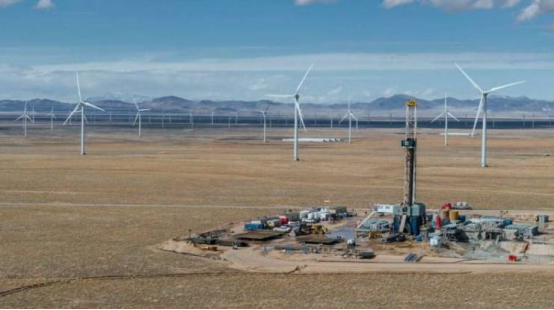
The research finds that if deployment costs for EGS decline following trends seen in other energy technologies, it could become the third-most important clean energy technology after wind and solar. Under baseline or lower-than-expected cost scenarios, the U.S. could deploy more than 250GW of enhanced geothermal capacity by 2050—compared with today's total U.S. grid capacity of roughly 1,200GW. Even at the highest cost estimates, with ambitious federal net-zero policies in place, over 500GW of geothermal resources could be deployed by 2050, including in areas east of the Mississippi River traditionally considered low-quality for geothermal.
Lead author Wilson Ricks, a postdoctoral researcher at the Andlinger Center for Energy and the Environment, said that assuming continued support from policies like the Inflation Reduction Act, EGS is very likely to capture a substantial share of U.S. electricity generation, and planners and policymakers should take the technology seriously.
EGS works by drilling deep into the Earth, fracturing hard, hot, impermeable rock to create underground reservoirs, then pumping cold fluid down one well and extracting hot fluid from another to drive turbines. Unlike conventional geothermal, which is limited to naturally superheated reservoirs, EGS can be deployed wherever hot rock is close enough to the surface.
Despite its promise, EGS has been largely overlooked in most energy-system models. Part of the reason is that the first U.S. pilot-scale commercial project only began operating a few years ago, and cost estimates depend on drilling prices and rock depth/temperature, making modeling more complex than for other technologies. Ricks noted that unlike solar, identifying optimal EGS sites requires physically digging underground to confirm temperature and geology.
However, Ricks believes EGS may have an easier path to market than technologies like advanced nuclear or carbon capture. High-quality geothermal resources can enable the first few projects, and as companies gain expertise, costs will fall over time. EGS also benefits from a resource curve—hot rock near the surface in the West is cheaper to develop, while deeper rock east of the Mississippi is more expensive. Building the first-of-a-kind plants near the best thermal resources helps offset high initial costs and paves the way for nationwide commercialization.
The researchers found that even if policies were repealed today, EGS could still find a large market in the western U.S., but sustained federal support is critical for the technology to play a national-scale role. Study leader Jesse Jenkins, Associate Professor of Mechanical and Aerospace Engineering, said government support is most valuable in the early learning-curve phase when technologies are most expensive and fighting for market share, and continued federal backing is essential for large-scale commercialization of EGS and other emerging technologies.
While the researchers acknowledge that their assumed learning rates for EGS may differ from real-world data, they state this is the most empirically grounded and robust cost analysis of EGS to date. As understanding of EGS costs deepens and nationwide subsurface rock temperature mapping improves, the work will continue to be refined. Ricks noted that with pilot-scale projects now operating and 100MW projects expected soon, far more is known about the technology than a few years ago, and EGS could become a major player in the future energy system.