
In the field of high-end medical device manufacturing, surgical precision and safety have always been core challenges. A recent article published in Science Robotics, titled "Medical Needles in the Hands of Artificial Intelligence: Toward Autonomous Robotic Navigation," formally introduces the concept of AI-guided medical procedures using needles, bringing new hope for solving complex surgical difficulties.
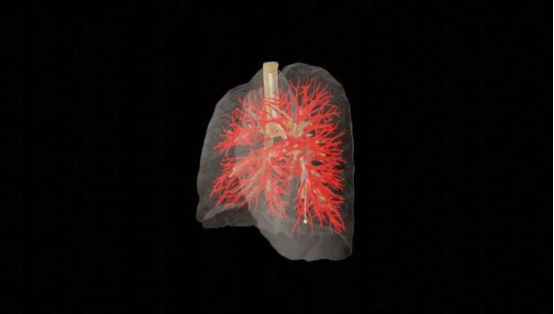
In many surgical scenarios, physicians face extremely high risks. For example, when attempting to reach a pea-sized cancerous nodule deep in a patient's lung, hidden behind intricate and breathing-motion-affected critical blood vessels and airways, a deviation of just one millimeter can puncture a major artery, while missing the target may allow cancer cells to spread and miss the treatment window. Such situations occur in thousands of procedures, where anatomical obstacles complicate surgery and accuracy becomes paramount.
"The era of 'AI guidance' in medicine is arriving," said Ron Alterovitz, Distinguished Professor of Computer Science at the University of North Carolina. Robots equipped with advanced AI can assist physicians and autonomously perform tasks, achieving unprecedented precision and making complex surgeries safer and more effective.
For decades, physicians have relied on image-guided techniques such as X-rays, CT, and MRI to visualize patient anatomy and plan puncture paths—a technology dating back to the invention of X-rays in the late 19th century. Today, the latest advances in artificial intelligence are propelling medical technology forward by leaps and bounds. AI can automatically analyze images, identify targets and obstacles, calculate safe trajectories, and even autonomously steer robotic needles around sensitive tissues to reach deep inside the body.
A research team from the University of North Carolina at Chapel Hill, Vanderbilt University, and the University of Utah demonstrated a medical robot capable of autonomously steering a needle to reach clinically relevant targets in the lungs of living tissue with high accuracy—outperforming physicians using only conventional tools. This case study details the transformative shift from image guidance to artificial intelligence guidance, where AI assists in perceiving patient anatomy, tracking surgical progress, planning instrument motion, and executing those motions.
The article formally defines the AI guidance concept, aiming to leverage AI to improve physician efficiency and lay the foundation for robotic autonomy. AI guidance consists of four components:
Perceive anatomy: accurately identify structures inside the patient
Plan instrument motion: determine optimal paths for surgical instruments
Perceive instrument state: real-time awareness of instrument status in real time
Execute instrument motion during surgery: ensure precise surgical operations
Each component can provide varying levels of artificial intelligence guidance—from physicians completing tasks with AI assistance, to AI performing tasks while physicians monitor and intervene, to completely AI-driven execution without human intervention.
The article categorizes existing systems and discusses research challenges for achieving higher levels of AI guidance. The researchers emphasize that widespread clinical adoption faces key obstacles, including ensuring safety, operating under regulatory environments, developing intuitive physician–AI interfaces, and integrating the technology into clinical workflows.
Despite the challenges, Alterovitz is optimistic about the future of AI-guided medical procedures. He stated that breakthroughs in artificial intelligence and robotics will continue to increase the level of AI guidance and robotic automation in medical procedures, providing physicians with new tools to make high-difficulty surgeries safer and more effective. This research is expected to lead the high-end medical device manufacturing field into a new stage of development.