
Recent studies on Chang'e-6 lunar samples have yielded new discoveries. Chinese scientists, through research on basalt samples collected by Chang'e-6 from the Moon's far side, have revealed an "ultra-reducing" state of the lunar mantle. This finding further deepens human understanding of the Moon's internal composition and provides new clues for comprehending the Moon's formation and evolution.
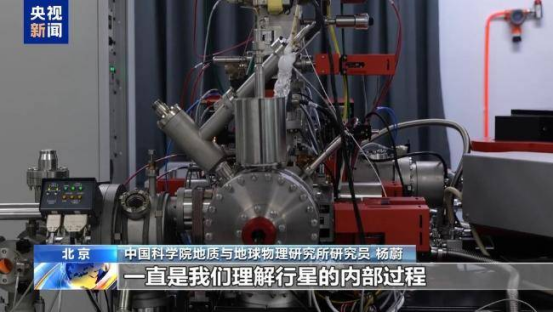
Research Shows Chang'e-6 Basalt Originated from Ultra-Reducing Lunar Mantle
The Moon's interior consists of the lunar crust, mantle, and core. The lunar mantle, located between the crust and core, is over 1,000 kilometers thick and accounts for more than half of the Moon's volume. It is the source material for lunar magmatic activity and volcanic eruptions, influencing the Moon's evolution.
An "ultra-reducing lunar mantle" refers to the mantle being in a highly reducing state, where elements tend to exist in lower valence states. This implies that the mantle material is more primitive or has undergone reduction processes due to large impacts.
Recently, research findings published by Chinese scientists in the international journal Nature Communications reveal that the deep lunar mantle in the Chang'e-6 landing area is not only "drier" and "more depleted" than the lunar mantle on the near side but also more "reducing."