
A research team from Australia's La Trobe University has published significant findings in the journal ACS Applied Materials & Interfaces, successfully developing a new conductive polymer, 2D PEDOT, based on hyaluronic acid. This technological breakthrough is expected to significantly enhance the performance and reliability of wearable electronic products such as smartphones and medical monitoring devices.
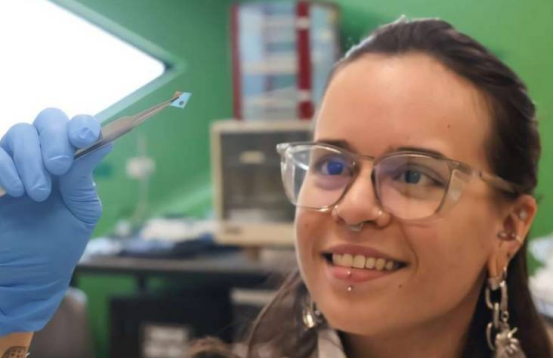
The team innovatively used a "bound dopant template" method, directly coating hyaluronic acid on a gold-plated substrate to form an ultra-thin conductive film. Project leader Associate Professor Wren Greene explained: "Traditional conductive polymers face challenges in preparation and performance instability. Our method not only simplifies the manufacturing process but also achieves precise control over the material's conductive properties."
The material exhibits several outstanding characteristics:
Nanometer-level thickness while maintaining high transparency
Conductivity approaching metal levels
Excellent flexibility and mechanical strength
Highly reproducible preparation process, suitable for large-scale production
In medical applications, this technology is particularly noteworthy. Team member Dr. Saimon Moraes Silva pointed out: "Reproducible preparation of high-quality conductive polymers has long been a bottleneck in medical sensor development. Our 2D PEDOT provides a new solution to this problem." The material can be used to develop more accurate and reliable physiological signal monitoring devices and drug delivery systems.
The research team is currently working on optimizing the material's long-term stability and biocompatibility in preparation for clinical applications. Associate Professor Greene stated: "This technology is not limited to the medical field; it has broad application prospects in flexible displays, smart wearables, and many other areas."