
A team of scientists from The Scripps Research Institute in the United States has published a groundbreaking study in the journal Science, successfully developing a continuous protein evolution system named T7-ORACLE. This innovative technology accelerates protein evolution by up to 100,000 times compared to natural processes, with the potential to fundamentally transform the way drug discovery and biotechnology research are conducted.
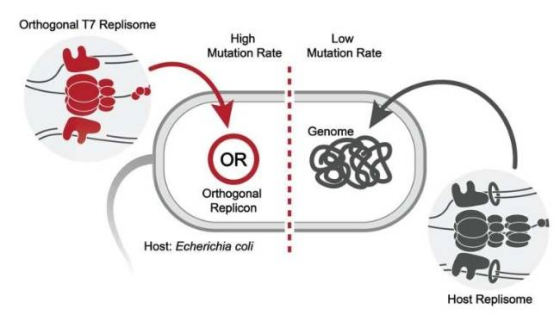
"The research team creatively engineered the DNA replication machinery of E. coli to create an orthogonal mutagenesis platform independent of the host genome. The system is based on the highly efficient DNA replication machinery of bacteriophage T7, which was engineered to generate mutations at high frequency. Pete Schultz, President and CEO of The Scripps Research Institute, stated: “T7-ORACLE is like putting a turbocharger on the evolution process. It enables continuous optimization of proteins during cell division without interfering with normal cellular functions.”
In proof-of-concept experiments, the team inserted the common antibiotic resistance gene TEM-1 β-lactamase into the system and exposed E. coli to gradually increasing concentrations of various antibiotics. Remarkably, within just one week, enzyme variants with 5,000-fold improved resistance were evolved. Even more notably, these mutations closely mirrored those observed clinically in drug-resistant strains, and some combinations even exhibited stronger resistance.
Assistant Professor Christian Diercks explained: “The most outstanding advantage of T7-ORACLE is its versatility and ease of use. The system is not limited to specific types of proteins—researchers can insert any target gene and rapidly obtain variants with desired properties. At the same time, it is fully compatible with standard laboratory equipment and workflows, requiring no specialized instruments or complex operations.”
Currently, the research team is applying this technology to several key areas:
Developing highly potent antibodies against specific cancer targets
Optimizing the activity and specificity of therapeutic enzymes
Designing specific proteases capable of recognizing disease-associated proteins
Exploring new possibilities in synthetic genomics
Professor Schultz emphasized: “T7-ORACLE represents a major advance in synthetic biology. It perfectly combines rational design with continuous evolution, providing an unprecedentedly efficient platform for discovering functional molecules.” This technology not only has the potential to dramatically accelerate drug development timelines but may also offer new solutions to global challenges such as antibiotic resistance.