
The WEHI Institute in Australia, in collaboration with Monash University, has published significant research findings in the journal Science, successfully resolving the three-dimensional structure of the malaria parasite Pfs230 and Pfs48/45 protein complex for the first time using cryo-electron microscopy. This discovery provides a key target for developing next-generation vaccines to block malaria transmission.
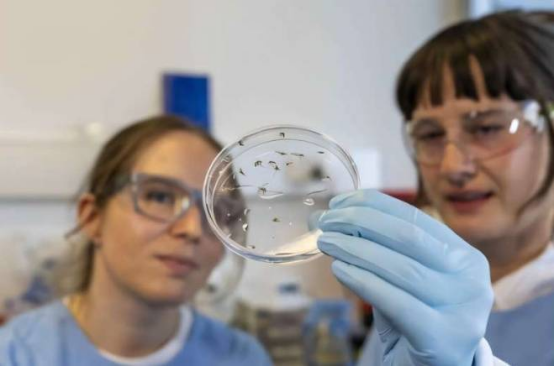
The research team directly purified the fertilization-essential protein complex from the malaria parasite itself, rather than using laboratory-recombinant proteins. Project leader Professor Wai-Hong Tham stated: "We observed the interaction patterns of these proteins in their natural state for the first time and identified new vaccine targets." Based on the structural information, the team developed an mRNA candidate vaccine that demonstrated a 99.7% transmission-blocking effect in animal experiments.
The vaccine targets a vulnerable stage in the malaria parasite's life cycle. Professor Tham noted: "The number of malaria parasites in mosquitoes is relatively small, making it an ideal target for blocking transmission." The research team is now planning to combine this vaccine with vaccines targeting malaria parasites in humans to build a multi-stage prevention and control strategy.