
Researchers at the University of Minnesota Twin Cities have made a new discovery by observing and analyzing the first known type of novel plasma wave in Jupiter's auroras. This research helps us understand "alien auroras" on other planets and further reveals how Earth's magnetic field protects us from harmful solar radiation.
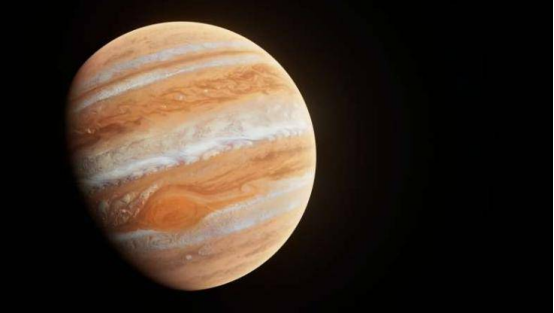
The observation is based on data from NASA's Juno spacecraft. During a historic low-altitude pass over Jupiter's north pole, the team applied its expertise in data analysis to study information from Jupiter's polar region for the first time. The study was published in Physical Review Letters.
Ali Sulaiman, Assistant Professor in the School of Physics and Astronomy at the University of Minnesota, said: “The James Webb Space Telescope has given us some infrared images of auroras, but Juno is the first spacecraft to orbit Jupiter's poles.”
The space around magnetized planets like Jupiter is filled with plasma—a superheated state of matter where atoms are split into electrons and ions. These particles are accelerated toward the planet's atmosphere, causing the gases to glow and form auroras. On Earth, we see familiar green and blue lights. However, Jupiter's auroras are typically invisible to the naked eye and can only be observed using ultraviolet and infrared instruments.
The research team's analysis shows that due to the extremely low density of plasma in Jupiter's polar regions and its powerful magnetic field, the plasma waves have very low frequencies, unlike any phenomena previously observed around Earth.
Robert Lysak, Professor in the School of Physics and Astronomy at the University of Minnesota and an expert in plasma dynamics, said: “While plasma behaves like a fluid, it is also influenced by its own magnetic field and external fields.”
The study also reveals how Jupiter's complex magnetic field funnels particles into the polar cap, unlike Earth's auroras, which form a ring-shaped zone of auroral activity around the polar cap. The researchers hope that as the Juno mission continues, more data can be collected to support further study of this new phenomenon.
In addition to Lysak and Sulaiman, the research team includes Sadie Elliott, a researcher in the School of Physics and Astronomy, as well as researchers from the University of Iowa and the Southwest Research Institute.