
Since 1988, plant scientists have relied on the standard “gene gun” for genetically modifying crops to enhance yield, nutrition, pest resistance, and other key traits. However, this technology propels tiny particles loaded with genetic material into plant cells using high pressure, facing challenges such as low efficiency, inconsistent results, and tissue damage caused by high-speed particles.
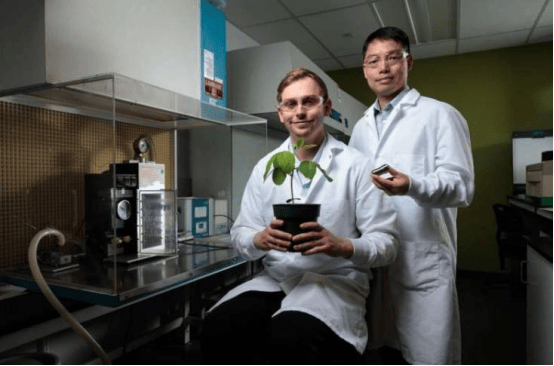
A team led by Shan Jiang, Associate Professor in the Department of Materials Science and Engineering at Iowa State University, set out to improve this fundamental tool in plant research. Their findings, published in Nature Communications, not only detail the process of finding a solution but also describe the creation of a startup company based on the invention.
Professor Jiang has a strong research background, having served as a postdoctoral researcher in the Langer Laboratory at MIT, led by Robert Langer, a pioneer in mRNA drug development. Although opportunities in medical research were limited, Professor Jiang turned his attention to agriculture, particularly how to efficiently deliver DNA into plant cells to introduce or enhance crop traits.
Through a chance phone conversation, Professor Jiang connected with Iowa State University agronomist Kan Wang, and they immediately aligned on the challenges in plant science research, especially the difficulty of delivering genetic material through the tough plant cell wall. Professor Jiang noted that this has long been an overlooked area, with few materials scientists venturing into plant cell delivery research.
Traditional gene gun technology coats genetic material onto tiny gold or tungsten particles, which are then shot into plant cells. However, the process is inefficient and often results in fragmented genomes and multiple transgene insertions, making gene expression unpredictable. Professor Jiang and his team decided to seek a new solution.
After four years of effort, the research team used computational fluid dynamics modeling of the gene gun particle stream and identified a bottleneck inside the gun barrel. This bottleneck caused particle loss, flow interruption, pressure reduction, and velocity slowing, thereby affecting transformation efficiency. Based on this discovery, the team designed a new internal barrel—“diverter barrel”—and produced test samples using 3D printing technology.
Test results showed that the gene gun modified with the diverter barrel significantly improved performance, increasing particle guidance efficiency from approximately 21% in traditional gene guns to nearly 100%. In onion tests, transient transfection efficiency increased by 22 times; in corn seedlings, viral infection efficiency increased by 17 times; and in wheat, the efficiency of CRISPR genome editing experiments doubled.
Iowa State University plant scientist Kan Wang stated that the quality of laboratory work improved by 10 to 20 times, with work efficiency greatly enhanced. Yiping Qi, Professor of Plant Science and Landscape Architecture at the University of Maryland, also noted that the diverter barrel will make plant transformation and genome editing easier and more efficient, particularly showing tremendous potential for heritable genome editing in crops like wheat.
Professor Jiang stated that the diverter barrel improves efficiency by 10 to 20 times, saving plant scientists and agricultural companies millions of dollars in time and resources while accelerating the turnaround of plants or products. He emphasized that although the device appears simple, its benefits are invaluable, helping to develop safer and more effective crop improvement strategies, enhancing crops' environmental adaptability and nutritional content, and promoting sustainable energy production.