
In regional town building construction, it is possible to generate little or no waste, but it requires the project client to consider waste reduction from the planning stage. A new study by scholars at Charles Darwin University (CDU) explores the barriers to adopting a circular economy in Alice Springs building projects.
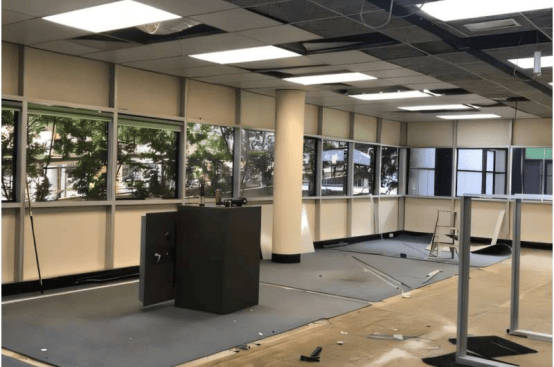
The circular economy aims to reduce waste and improve resource efficiency by reusing, repairing, and recycling products. Globally, construction waste accounts for approximately 30% of total waste. This study focuses on the redevelopment project at Charles Darwin University’s Alice Springs campus, which applied circular economy principles in design and construction.
The research, led by Dr. Deepika Mathur, Senior Research Fellow at CDU’s Northern Institute, involved the initial implementation of principles at project startup, interviews with key stakeholders such as project managers, architects, and contractors, and monitoring of waste movements. The findings were published in the journal Journal of Urban Affairs.
Dr. Mathur noted that in this project, the client (CDU) played a leadership role by adopting circular economy methods, requiring architects to reuse certain materials and incorporating waste management weighting in tender documents. “The client appoints architects, project managers, builders, and other consultants. Their acceptance of circular economy practices in building construction projects is crucial to adoption.”
In the project, stakeholders reused partitions, ceiling tile frames, timber panels, and other materials, diverting reusable and recyclable materials from landfill. Architects and glaziers collaborated to redesign the information shop’s new partitions, reusing old glass and doors. Ceiling tile frames and timber panels were also reused on-site. Waste was sorted on-site and sent to local recycling facilities or metal recyclers for reuse and recycling, achieving more sustainable solutions. Materials that did not meet Australia’s new safety standards were not reused.
However, the study also identified other major barriers. Dr. Mathur pointed out that small and medium-sized enterprises lack knowledge of waste reduction and management, and the cost of transporting waste from remote towns is an issue. Metals, paper, plastics, and cardboard all need to be transported interstate for processing. “Small businesses such as architects, builders, and subcontractors face barriers due to lack of waste reduction knowledge and limited local recycling options. Professional development programs organized by top institutions can help build skills.”
To promote the adoption of circular economy in the regional building industry, Dr. Mathur recommends incorporating circular economy standards into procurement policies while balancing sustainability and budget. Financial incentives, regional environmental ratings, transport subsidies, and upskilling of building industry stakeholders are key to driving widespread industry participation.
The study was co-authored by Professor Maneka Jayasinghe, Dean of CDU’s College of Business and Accounting, and Professor Kerstin Zander from CDU’s Northern Institute.