
Worcester Polytechnic Institute (WPI) has achieved a significant breakthrough in sustainable energy technology. Led by Professor Yan Wang from the Department of Mechanical and Materials Engineering, the team has developed a new, scalable recycling method for lithium-ion batteries that promotes the battery recycling industry in an efficient and environmentally friendly way, marking a key step forward in sustainable energy technology advancement.
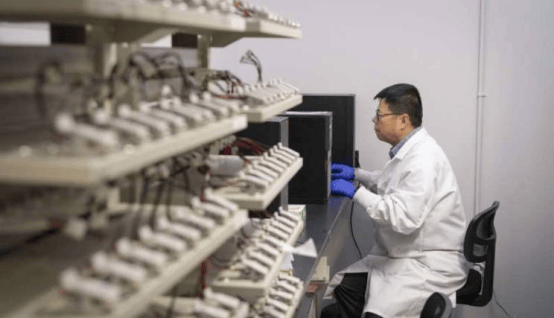
The team’s research results, titled “Upcycling Mixed Waste Lean-Nickel Cathodes into Nickel-Rich Polycrystalline Cathodes,” were published in the journal Energy Storage Materials. The paper details an innovative hydrometallurgical upcycling method that demonstrates significant advantages over traditional recycling methods in both environmental and performance aspects.
Currently, mixed waste lean-nickel (Ni-lean) cathode materials are common in spent lithium-ion batteries. Traditional recycling methods are ineffective at processing these materials and often rely on energy-intensive processes, yielding low-value outputs. The new process developed by Professor Yan Wang’s team specifically targets such materials and achieves a key breakthrough.
The new process is highly effective, recovering over 92% of key metals such as nickel, cobalt, and manganese, and converting them into high-performance cathode powders. Tests show that batteries made from these recycled materials perform on par with those made from virgin materials. In commercial-scale pouch cell tests, the batteries retained 88% capacity after 500 charge cycles and still over 85% capacity after 900 cycles.
In terms of environmental protection and energy saving, the new process also performs excellently. Compared to traditional hydrometallurgical methods, energy consumption is reduced by 8.6%, and carbon emissions are significantly decreased—13.9% lower than traditional recycling and only slightly higher than direct upcycling recycling.
Professor Yan Wang stated: “This work is of great significance. It not only effectively addresses the environmental challenges posed by battery waste but also helps reduce our dependence on mining critical materials. We have successfully demonstrated that large-scale production of high-performance batteries using recycled materials is feasible. This is crucial for building a more sustainable and resilient battery supply chain.”
With the continuous increase in battery waste and the growing global demand for critical materials required for electric vehicles and other clean energy technologies, these two major challenges urgently need solutions. WPI’s innovative achievement directly targets both issues. As the industry and policymakers increasingly emphasize sustainable solutions, this breakthrough is expected to play a key role in establishing a more circular and climate-conscious battery economy, accelerating the entire industry toward a green and sustainable direction.