
Scientists at the Salk Institute have discovered a novel microbial protein, SLC35A4-MP, which plays a critical role in maintaining mitochondrial structure and metabolic balance. The study, published on August 29, 2025, in the journal Science Advances, provides a new perspective for understanding the mechanisms of metabolic diseases.
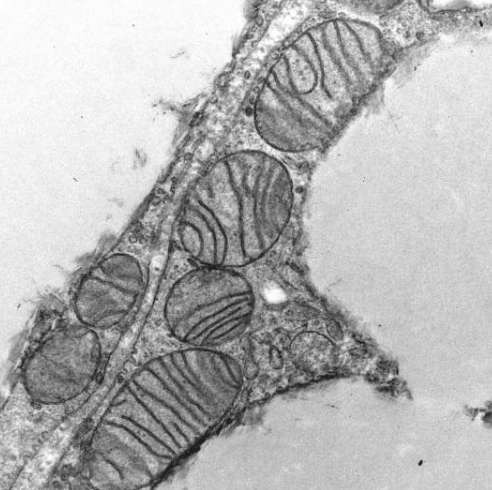
After genetically removing SLC35A4-MP from brown fat cells in mice, the researchers observed damaged mitochondrial structure and abnormal metabolic function. In cold exposure experiments, mice lacking this protein were unable to effectively regulate body temperature and exhibited inflammatory responses. These phenomena indicate that SLC35A4-MP plays a key role in responding to metabolic stress. First author of the paper, Andréa Rocha, said: "SLC35A4-MP is one of the first microbial proteins to have its function fully identified in mice. Its regulatory function shows that microbial proteins cannot be ignored in health regulation."
The study originated from a discovery in the spring of 2024, when the team identified the genetic code for SLC35A4-MP in an upstream open reading frame of a messenger RNA strand. Senior author Alan Saghatelian pointed out: "Microbial proteins have long been regarded as random genetic material, but our research proves that they are indeed key regulators of cellular physiology." The research team used techniques such as cryo-electron microscopy and metabolic analysis to confirm that the protein is located in the mitochondrial membrane and participates in the regulation of energy balance.
The field of microbial protein research is continuously expanding. Scientists believe that further studies on SLC35A4-MP may provide new therapeutic directions for mitochondrial-related diseases such as obesity and aging. The Salk Institute is currently conducting follow-up research aimed at exploring the physiological mechanisms of more functional microbial proteins.