
PhD students Louis Desdoigts and Max Charles from the University of Sydney have successfully developed a new software algorithm to repair blurry images captured by a key scientific instrument on the James Webb Space Telescope. This technological breakthrough has restored the original imaging clarity of the telescope's aperture masking interferometer without the need for hardware repairs via a space mission.
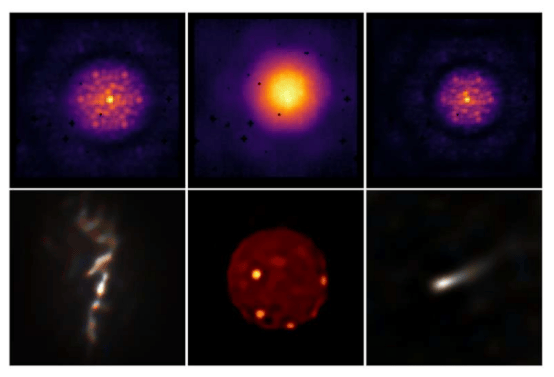
The software repair solution primarily addresses the electronic distortion phenomenon present in the infrared camera detector. This charge bleed effect, known as "brighter-fatter," causes a decline in restored image quality. The AMIGO calibration system created by the research team effectively eliminates imaging defects by simulating the telescope's optical properties and electronic system behavior using neural network algorithms. Professor Peter Tuthill from the University of Sydney commented: "They didn't send astronauts to install new parts — they solved the problem with code."
After software optimization, the aperture masking interferometer has achieved fine observations of faint celestial objects, including direct imaging of exoplanets and red-brown dwarfs. Complementary research led by Max Charles has also successfully captured high-resolution data of astronomical phenomena such as black hole jets and volcanic activity on Jupiter's moons. Dr. Desdoigts said: "This work makes the vision of the James Webb Space Telescope clearer. It is gratifying to see that a software solution has expanded the telescope's scientific detection capabilities and that it could be achieved in the laboratory."
This achievement originates from the only Australian-designed hardware on the James Webb Space Telescope — the aperture masking interferometer. The device, invented by the University of Sydney team, can obtain ultra-high-resolution images of the starry sky through interferometric measurement technology. The related research paper has been released on the preprint platform arXiv, and Dr. Desdoigts' work will be formally published in Publications of the Astronomical Society of Australia after peer review.