
A global team of experts from academia and industry has recently issued a landmark consensus statement focusing on the development of next-generation photodetectors based on emerging light-responsive materials. The statement, led by Professor Vincenzo Pecunia, head of the Sustainable Optoelectronics Research Group, was published in the journal Nature Photonics and featured on the cover. It provides a unified framework for the characterization, reporting, and evaluation of emerging light-sensing technologies, with the potential to accelerate innovative applications in fields such as healthcare, smart homes, agriculture, and manufacturing.
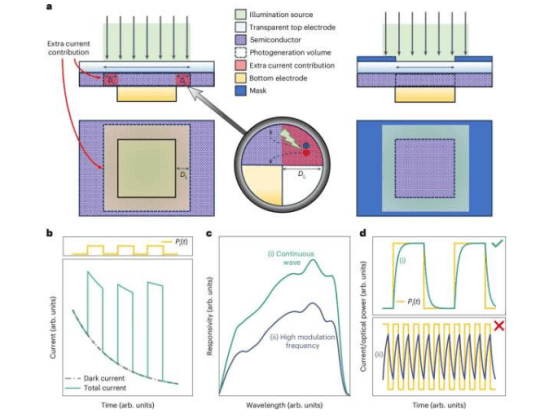
Photodetectors, as core devices that convert optical signals into electrical signals, have a global market value exceeding $30 billion. Emerging photodetectors, such as those based on organic semiconductors, perovskites, quantum dots, and two-dimensional materials, are expected to further advance the field through ultra-thin, flexible, stretchable, and lightweight designs. However, the rapid development of materials and device structures has posed challenges for the research community in consistently measuring and comparing performance. Professor Pecunia pointed out: "The field has been hindered by inconsistent reporting and characterization methods. The lack of standardized approaches makes it difficult to assess technological breakthroughs and their real-world impact."
To address these challenges, Professor Pecunia convened 53 experts from 43 universities and research institutions, along with 11 leading companies, to distill best practices for the characterization of light sensors. These practices integrate diverse perspectives, cutting-edge research, and real industry needs, providing clear guidelines for evaluating key performance metrics—including sensitivity, low-light performance, speed, and stability—along with detailed checklists and experimental protocols. Professor Pecunia stated: "The vision of these guidelines is to help researchers and industry identify the true frontiers of technological advancement and accelerate the translation of emerging photodetector technologies into everyday devices."
Within the Sustainable Optoelectronics Research Group, Professor Pecunia is committed to advancing light sensor technologies for applications in smart agriculture, environmental monitoring, and industrial safety. He hopes that by drawing on best practices from collaborative research, these technologies can be accelerated toward real-world implementation, ultimately improving quality of life, productivity, and sustainability.