
A team led by Karin Plessas at the Phil and Penny Knight Campus for Accelerating Scientific Impact at the University of Oregon has published a new study in the journal Science Advances. The research constructs large-scale biological datasets through innovative technology to enhance the application potential of artificial intelligence in the biomedical field, particularly in addressing antibiotic resistance.
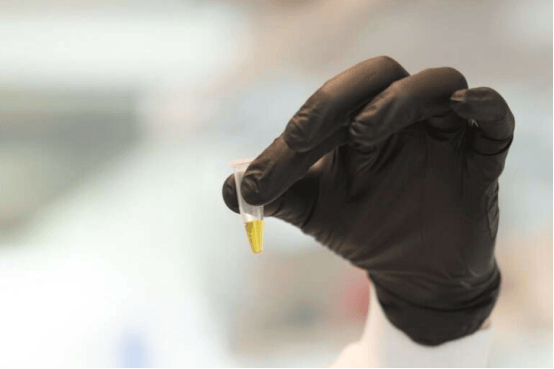
The research team developed a gene synthesis technology called DropSynth, which can simultaneously generate thousands of gene variants in a single test tube. Team members Carl Romanovich and Carmen Resnick applied this technology to study the mechanisms of bacterial antibiotic resistance. Using the dihydrofolate reductase gene as the research object, they successfully constructed more than 1,500 gene variants from different bacterial species.
The study used a modified Escherichia coli strain as the test system and mapped a detailed resistance profile by observing the performance of these gene variants under the action of the antibiotic trimethoprim. Romanovich stated: "This technology allows us to systematically study the functions of thousands of microbial genes, providing new research tools for addressing antibiotic resistance."
The research results show that many DHFR variants from distantly related bacteria can still maintain functional activity in the Escherichia coli system. By using machine learning algorithms to analyze these large-scale datasets, the researchers were able to identify key gene regions associated with antibiotic resistance. These biomedical artificial intelligence datasets provide new possibilities for predicting the evolution of resistance.
The research team has now established SynPlexity, a company dedicated to promoting the commercial application of DropSynth technology. This biomedical artificial intelligence research is not only applicable to antibiotic development but can also be extended to multiple fields such as cancer research, virus evolution analysis, and protein design. Plessas emphasized: "Our method of creating large-scale biological datasets can be applied to many research directions in biology."