
A joint research team from Cornell University and the University of Maryland has successfully created a three-dimensional atmospheric temperature map of the exoplanet WASP-18b using observational data from the James Webb Space Telescope. The study, published in the journal Nature Astronomy, is the first to apply eclipse mapping spectroscopy to exoplanet atmosphere analysis, revealing significant temperature variation zones on the planet's surface.
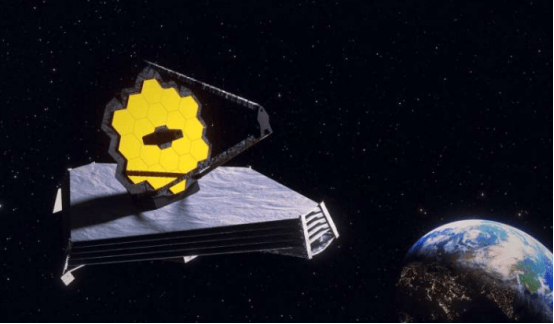
WASP-18b, located approximately 400 light-years from Earth, is an ultra-hot Jupiter with an orbital period of only 23 hours. Its mass is about 10 times that of Jupiter, and its surface temperature approaches 5,000 degrees Fahrenheit. The research team constructed a three-dimensional temperature map containing latitude, longitude, and altitude information by analyzing the planet's brightness changes at multiple wavelengths during its orbit around its host star.
First author of the paper and Cornell University postdoctoral researcher Ryan Challener stated: "Eclipse mapping allows us to image exoplanets that cannot be directly observed. With this new telescope technology, we can begin to understand exoplanets in the same way we study planets in our solar system." The study confirmed the existence of a circular high-temperature zone on the planet's dayside, with temperatures high enough to dissociate water molecules.
The three-dimensional temperature map shows that WASP-18b's surface has regions with varying temperatures. A relatively cooler ring-shaped band surrounds the hot spot, forming a unique atmospheric structure. Challener noted: "The measurements show significantly lower water vapor content in the hot spot region, proving that the temperature there is extremely high and begins to break down water molecules. Theoretical predictions have finally been observationally confirmed."
This three-dimensional mapping technique can be extended to the study of other types of exoplanets. Among the more than 6,000 known exoplanets, hundreds of hot Jupiters are suitable for this analysis method. As the James Webb Space Telescope continues to accumulate observational data, astronomers will be able to more precisely resolve the atmospheric characteristics of exoplanets.