
Researchers from the Beijing Institute of Genomics and IMDEA Nanociencia have jointly developed a new fluid handling technology that can significantly improve DNA sequencing efficiency and reduce testing costs. This innovative method provides a new technical pathway for the field of gene sequencing.
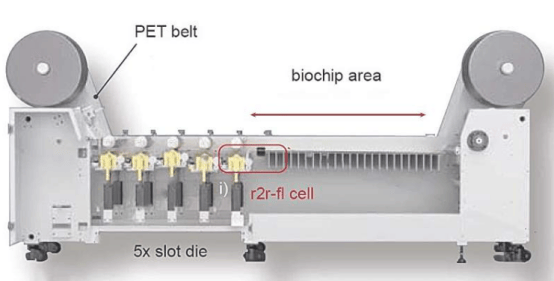
Traditional DNA sequencing technology relies on flow cell structures, requiring repeated pumping in and out of liquid reagents to complete the reaction process. While this approach is suitable for large-scale industrial sequencing, it presents challenges such as operational inconvenience and drying effects in small laboratories or clinical settings with limited sample volumes. The new fluid technology adopts a roll-to-roll design, replacing the traditional liquid pumping process with a method that shears the liquid surface. This greatly increases reagent replacement speed and reduces reagent consumption by up to 85 times.
The technology shortens DNA sequencing time from several days to less than 12 hours, while significantly lowering reagent usage costs. The research results have been published in the journal Nature Methods. Professor Thomas Hermans from IMDEA Nanociencia stated: "This is a completely new way of thinking about fluidics. It is a classic textbook example—an ideal fluid system with a moving wall. Through this roll-to-roll approach, we have now turned this textbook concept into reality."
Professor Hermans analyzed the pressure drop and mass transfer efficiency in the system through numerical simulations, providing theoretical support for the technical realization. This breakthrough in DNA sequencing technology is not only applicable to gene detection but is also expected to have a broad impact in healthcare and other related industries. The new fluid handling solution offers a more feasible gene sequencing approach for resource-limited environments.