
A research team from Johns Hopkins University has published a new microchip manufacturing technology in the journal Nature Chemical Engineering. The study provides a new pathway for developing smaller and more efficient microchips through innovative materials and processes. This microchip technology can be applied to mobile phones, automobiles, and various electronic devices.
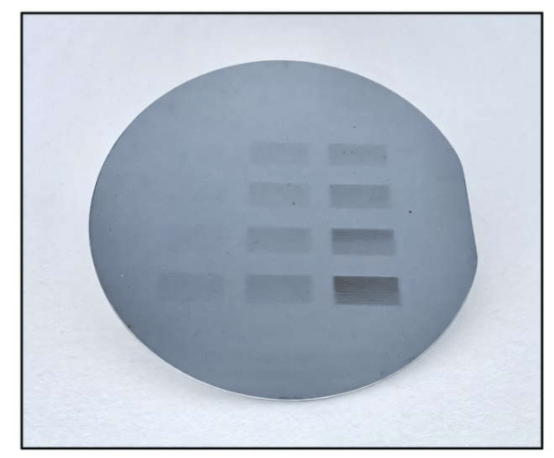
The researchers used a new chemical liquid deposition (CLD) process to achieve precise deposition of metal-organic thin films on silicon wafers. The team found that composite materials composed of metals such as zinc and imidazole-based organic compounds can effectively respond to extreme ultraviolet radiation (B-EUV), thereby etching nanoscale circuit patterns. The chemical liquid deposition method allows precise control of film thickness and is compatible with large-scale production lines.
Professor Michael S. Strano stated: "Future microchip manufacturing needs to find new processes that can achieve precise irradiation while remaining economically viable. The metal-organic material combinations we discovered provide more possibilities for the further development of microchip technology." The researchers have currently conducted pairing experiments with more than ten metals and hundreds of organic compounds to optimize the radiation response characteristics.
The study was jointly completed by Johns Hopkins University in collaboration with East China University of Science and Technology, École Polytechnique Fédérale de Lausanne, and other institutions. The new photoresist technology is expected to be applied in industrial manufacturing within the next decade, driving microchip technology toward even smaller sizes.