Wedoany.com Report on Feb 28th, The U.S. West Coast is advancing several new container terminal projects, including Pier 500 in Los Angeles, Pier S in Long Beach, and Terminal 46 in Seattle. Among these, the Ports of Los Angeles and Long Beach have designated Pier 500 and Pier S as "zero-emission" facilities. Terminal 46 in Seattle is also under negotiation, with the Northwest Seaport Alliance setting a goal to achieve zero emissions by 2050. In contrast, the newly constructed Sparrows Point Terminal in Baltimore is not required to meet zero-emission standards.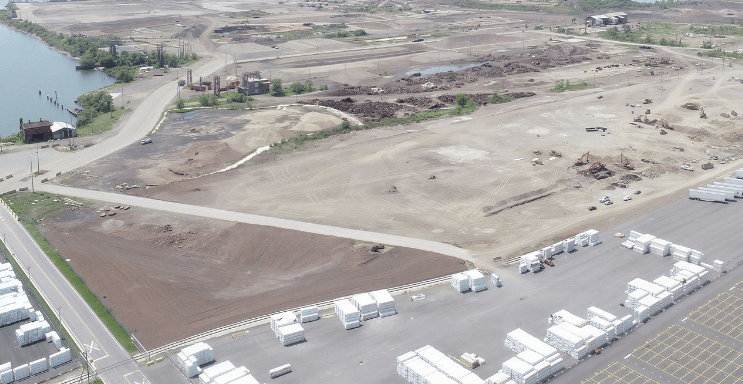
According to the Environmental Impact Statement submitted by Tradepoint TiL Terminal, LLC, the Sparrows Point Terminal will be equipped with electrified ship-to-shore cranes, rail-mounted gantry cranes, and rubber-tired gantry cranes. However, yard tractors, terminal tractors, and empty container handlers will still use diesel power. The report mentions that diesel equipment may transition to electric in the future but does not specify a concrete timeline or mandatory targets. Nevertheless, the terminal will provide shore power connections, making it the first on the East Coast with this capability, which will help reduce emissions and noise from vessels while docked.
In the emissions assessment, the U.S. Army Corps of Engineers compared the scenario of the Sparrows Point Terminal using shore power with a "no-action alternative" (assuming vessels would dock at other ports without shore power). The report indicates that the application of shore power will significantly reduce vessel emissions during berthing, and the long-term impact of terminal operations on air quality is limited. The analysis is based on the assumption of 500 vessel calls per year, with 150 of those calls originally serving other East Coast ports. Shore power directly offsets the berthing emissions from these vessels.
Mobile equipment at the Sparrows Point Terminal, such as diesel tractors and yard tractors, have sulfur dioxide and fine particulate matter emissions below thresholds. However, nitrogen oxide emissions exceed 50 tons per year, requiring mitigation. After consultation with the Maryland Department of the Environment and the U.S. Environmental Protection Agency, it was determined that these emissions would be addressed by acquiring and using emission reduction credits for offsetting. TTT has agreed to implement this measure.
The Sparrows Point Terminal is designed to simultaneously accommodate two ultra-large container vessels but must address air draft limitations. The current air draft of the Chesapeake Bay Bridge is 186 feet, creating an operational bottleneck. Maryland plans to replace the bridge with two new structures, increasing the air draft to 230 feet. The project is estimated to cost between $15 billion and $17 billion, with design starting in 2028 and construction beginning in 2032. Previously, the Francis Scott Key Bridge was damaged in March 2024 after being struck by a ship, and its replacement work has also commenced. The new structure will have an increased air draft of 230 feet.