Optimizing Valve Control with Variable Frequency Drive Technology at the University of Sheffield, UK
Dr. Richard Collins from the University of Sheffield, UK, recently released the hydraulic engineering music album "Water Supply" on the Bandcamp platform. The track "Water Hammer" in the album highlights the importance of slowly closing valves to avoid pipeline damage. This content has sparked industry discussions on valve control technology, with variable frequency drive (VFD) technology becoming a focal point.

In hydraulic engineering, rapid valve closure can lead to pressure transients, cavitation, and water hammer phenomena, damaging pipeline systems. Traditional methods emphasize slow operation, but modern applications often require more efficient control. VFD technology, through its soft start and stop functions, reduces pressure surges while maintaining operational speed. Laboratory tests have shown it can reduce upstream pressure transients by up to 85%.
AUMA's SQRV and SARV variable frequency valve actuators apply this technology at the valve level, supporting the creation of variable frequency curves with up to ten setpoints. For example, a valve can operate at full speed for 80% of its travel and then slow down to 25% speed for the final segment, protecting assets while reducing leakage risks. The actuators offer a speed range of 12 to 120 rpm and a torque range of 40 to 120 Nm, making them suitable for most standard applications.
VFD technology also enhances valve positioning accuracy, enabling linearization for simple devices like butterfly valves and supporting complex flow control. During Europe's AMP8 program, this technology, with its low inrush current characteristics, can utilize existing cables, facilitating upgrades to existing assets and demonstrating potential in off-grid solar applications.
Dr. Collins stated, "VFD technology is like a multi-tool, integrating advantages such as reduced leakage, energy savings, and enhanced control." As the water industry's demand for efficient solutions grows, this technology is expected to play a broader role in the field of valve control.
Related Products

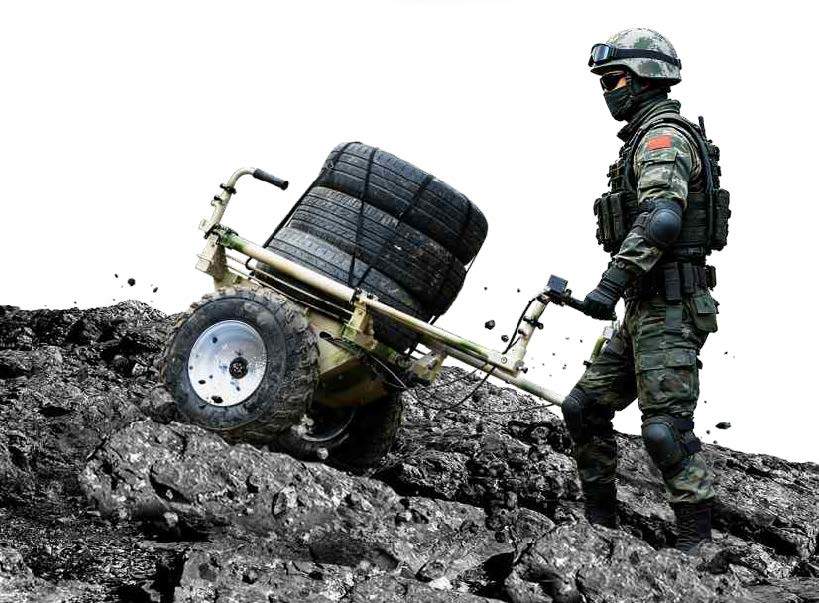
Tactical Individual Carrying Handcart Platform
Automation Research Institute Co., Ltd. of China South Industries Group Corporation

CAP1400 main feedwater flow nozzle flowmeter.
Jiangsu Hongda Instrument Technology Co., LTD.
High-Speed Flexible Fully Automatic Stamping Production Line
JIER Machine-Tool Group Co., Ltd.


Pneumatic high-pressure wear-resistant ball valve
Zhejiang Deca Control Valve Meter Co., Ltd.