Wedoany.com Report on Mar 9th, In the field of bearing selection, many engineers are accustomed to making judgments based on experience or catalog parameters. For example, they might assume that a large axial load necessitates switching to a thrust bearing. This intuition-based approach often overlooks the crucial step of calculating the equivalent dynamic load and verifying service life based on combined loads.
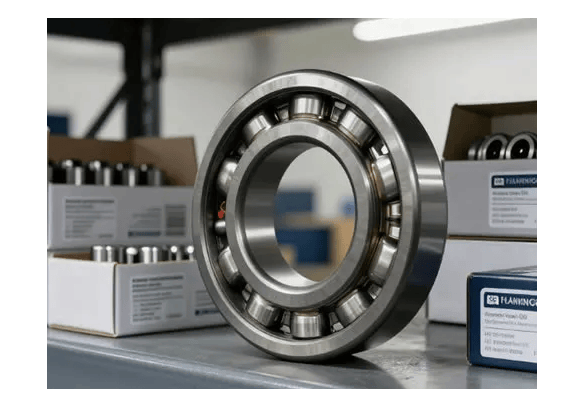
A reliable selection method is not about applying simple thresholds. Instead, it involves converting the radial force (Fr) and axial force (Fa) from actual operating conditions into a unified equivalent dynamic load P using the formula P = X·Fr + Y·Fa. This value is the core basis for evaluating bearing performance. Subsequently, the rated life L₁₀h must be calculated and compared with design requirements. The selection is only considered valid if the calculated life meets the target.
Even when the axial load appears significant, deep groove ball bearings may still meet life requirements under reasonable combined loads. Blindly upgrading to angular contact or thrust bearings not only increases costs but may also introduce unnecessary complexity.
This precise equivalent load verification method is suitable for R&D engineers pursuing high reliability, professionals engaged in mechanical system life analysis, as well as teachers and students in mechanical design-related fields at universities. It aims to advance the selection logic from experiential guesswork to quantitative verification.