en.Wedoany.com Report on Mar 24th, The field of perovskite solar cells is entering a new phase of development, aiming to reduce costs, improve efficiency, and promote mass manufacturing. On March 11, the independent Dutch research organization TNO announced the establishment of a new perovskite solar cell manufacturing company named Perovion Technologies. This move responds to the growing global demand for flexible solar cells.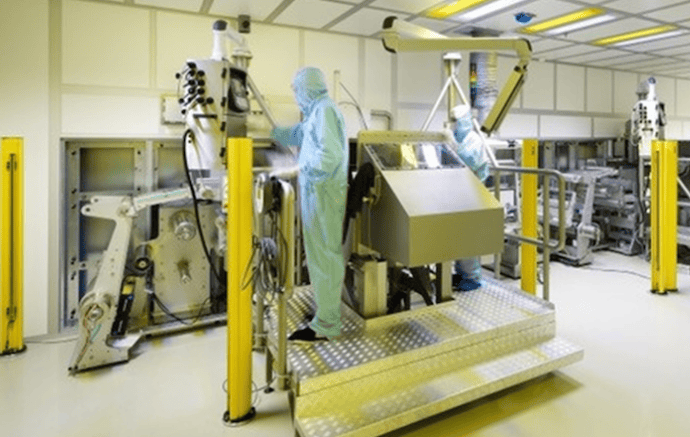
Stefan van de Beek, CEO of Perovion Technologies, stated, "Perovion initially focuses on market segments where demand for flexible solar cells is already well-defined." He added, "Together with module integrators and industrial partners, we are developing applications that can enter the market relatively quickly. Starting from these first applications, our goal is to move towards large-scale European production."
TNO is collaborating with European research organizations SolarNL and Solliance to plan the establishment of a network of "Roll2Roll Perovskite Factories" in Europe. TNO points out that this roll-to-roll manufacturing system is suitable for low-cost, high-volume production. Perovskite materials can be prepared in solution and sprayed or printed onto flexible films.
In the United States, perovskite technology is also making progress. California-based company Tandem PV focuses on tandem solar cells, combining perovskite with silicon to improve efficiency. In July of last year, the California Energy Commission awarded Tandem PV a $4 million grant for third-party testing and validation.
Additionally, Ohio-based First Solar has entered into a patent license agreement with UK-based Oxford Photovoltaics Limited to apply perovskite to its CdTe thin-film technology. First Solar explained, "This non-exclusive license paves the way for First Solar to continue advancing the development of its photovoltaic solar devices using perovskite semiconductors."
Researchers predict that under favorable conditions, the domestic U.S. CdTe industry could increase its manufacturing capacity to 100 gigawatts per year by 2030. Tesla CEO Elon Musk also plans to add $100 gigawatts worth of solar power to the U.S. grid in the short term to promote domestic manufacturing.
Localized production of perovskite solar cells can help enhance supply chain resilience and support the global energy transition. As the technology continues to mature, this field is expected to play a larger role in the global solar market.