en.Wedoany.com Report on Mar 24th, Professor Shuai Yong, Professor Zhang Yaning, and Associate Professor Pan Ruming's team from the School of Energy Science and Engineering at Harbin Institute of Technology has recently made new progress in the resource utilization of waste plastics. They developed a method based on electromagnetic induction heating, combined with a metal porous catalyst, achieving efficient pyrolysis-catalytic conversion of waste plastics and improving carbon recycling efficiency. This research result has been published in the journal National Science Review.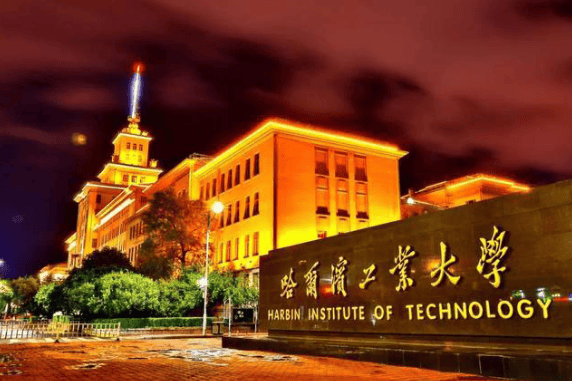
Plastic pollution is a global environmental challenge. Converting low-value waste plastics into high-value-added materials is a key topic in the field of the circular economy. Addressing the issues of low efficiency and uneven reactions in traditional electric heating, the team combined electromagnetic induction heating with a catalyst, optimized the reaction process, and improved heat and mass transfer efficiency, providing a new pathway for the chemical recycling of waste plastics. The research also elucidated the influence of catalyst interface characteristics on carbon nanotube growth, providing theoretical support for catalyst design. The prepared carbon nanotubes have application potential in energy storage and thermal management fields. Techno-economic analysis shows that this process has industrialization feasibility.
The first author of the paper is Associate Professor Pan Ruming. Co-first authors include doctoral student Yu Jie, Yang Youwei, and Professor Zaini from the Bandung Institute of Technology, Indonesia. The corresponding authors are Shuai Yong, Zhang Yaning, and Pan Ruming. This research received funding from projects such as the National Natural Science Foundation of China and the National Key Research and Development Program.