OpenAI Announces Shutdown of Sora and Termination of Disney Partnership, Strategic Focus Shifts to World Models and Robotics R&D
en.Wedoany.com Report, On March 24 local time, OpenAI officially announced it will shut down the video generation application Sora and simultaneously terminate its $10 billion partnership agreement with Disney. This decision marks a significant strategic shift for OpenAI, reallocating resources from the consumer video generation sector to more forward-looking research and development in world models and robotics technology.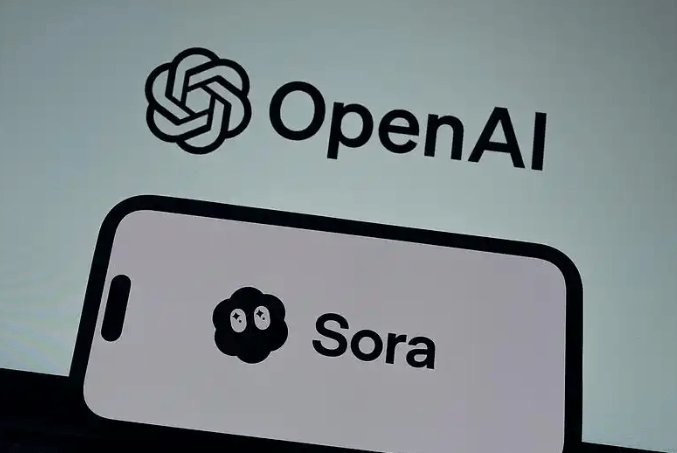
According to the announcement, Sora's iOS application, API interface services, and the Sora.com website will cease operations, with a detailed shutdown schedule to be released in the near future. The Sora team stated on social media that they will continue to focus on world model research to advance robotics technology, helping people solve physical tasks in the real world.
Industry analysts note that Sora's closure reflects a profound strategic shift at OpenAI. As competition in the artificial intelligence industry intensifies, with increasing pressure from rivals like Anthropic and Google, OpenAI is prioritizing resource allocation towards more potentially profitable areas such as capital, chips, and enterprise products. Operating video generation services consumes vast amounts of computational resources and electricity, representing a massive expense for any company. Media reports indicate that Sora's operation has already had a noticeable impact on the allocation of computing power for other teams.
Looking back at Sora's development journey, its rise and fall trajectory is poignant. In early 2024, when OpenAI first launched Sora, it stunned the entire tech industry. This software, capable of generating high-quality, feature-film-like videos from text prompts, sent shockwaves through the sector. Sora's release directly prompted numerous AI companies to accelerate the launch of their own AI video generation models. In September 2025, OpenAI created a standalone Sora application, allowing users to insert themselves into short videos. OpenAI once envisioned using AI video technology to build an AI-era social network centered around content sharing. However, the good times were short-lived. According to TechCrunch, by January of this year, Sora's downloads had plummeted by 45%. Although some employees of the Sora team were reportedly surprised upon learning about these changes, just a day earlier, OpenAI had published an article about Sora's safety standards.
Sora's shutdown also marks the end of the significant partnership between OpenAI and Disney. Earlier, the two companies announced a three-year licensing agreement allowing Sora users to generate AI short videos using over 200 iconic Disney characters, including Mickey Mouse. This deal was seen as a major milestone in collaboration between the tech industry and Hollywood, also sparking concerns among content creators about AI potentially replacing actors and creators.
The Sora team wrote on social media: "We have to say goodbye to Sora... We know this news is disappointing." The AI video product that once shook the entire industry has thus drawn to a poignant close. From stunning the world to a quiet exit, Sora's two-year journey reflects the harsh reality of the AI industry's evolution from technical demonstrations to commercial implementation: against a backdrop of high computing power costs and intense competition, even industry leaders are forced to make difficult trade-offs.
Related Products





Industrial and Commercial Point-Type Gas Detector
Jinan Benan Technology Development Co., Ltd.
Automatic Aiming Laser Remote Obstacle Removal Robot
Pinggao Group Weihai High-Voltage Apparatus Co., Ltd.
G.652.D Wavelength-extended Non-dispersion Shifted Single-mode Optical Fiber
HONGAN GROUP CO., LTD.
GYTA Type Non-Self-Supporting Aerial/Duct Optical Cable
TONGDING INTERCONNECTION INFORMATION CO., LTD.

Mine Explosion-proof and Intrinsically Safe Industrial Ethernet Ring Network (10 Gigabit/Gigabit)
Chongqing Mas Sci&Tech Co., Ltd.
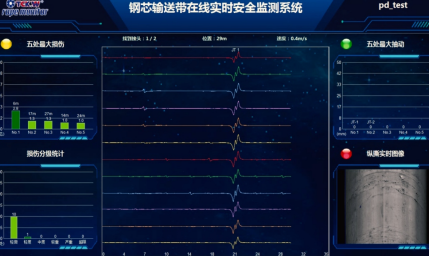
Conveyor Belt Intelligent Monitoring System
LUO YANG WIRE ROPE INSPECTION TECHNOLOGY CO., LTD.