en.Wedoany.com Reported, A common perception in the field of artificial intelligence is that larger models yield better performance. However, in manufacturing, factors such as latency, reliability, and cost are equally as important as raw intelligence. With the development of Industry 4.0 and smart factories, smaller and more efficient AI models are becoming more suitable tools for manufacturing applications.
Current trends in the AI field show that general intelligence is being compressed into smaller models. Taking the large-scale multi-task language understanding test as an example, the GPT-3 model achieved a 44% accuracy rate in 2020. By March 2024, the Qwen 1.5 MoE model, with activated parameters under 3 billion, was able to meet the passing standard. This enables AI models to be deployed closer to production lines, facilitating edge inference, reducing costs, and laying the groundwork for smart, connected manufacturing.
In real-world business scenarios, small models often deliver results comparable to large models. For instance, the Mistral 7-billion-parameter model performs on par with GPT-3.5 Turbo in news summarization tasks, with potential cost optimization exceeding 30 times. This efficiency advantage aligns with the demands of Industry 4.0, such as in scenarios like production report summarization and maintenance log analysis, where manufacturers require fast and accurate domain-specific intelligence.
Despite the rapid development of small models, large models still hold value for highly complex tasks, such as cross-domain engineering reasoning and large-document compliance analysis. Most manufacturing enterprises adopt a hybrid AI architecture, deploying large models at the central end and utilizing small models at the field end.
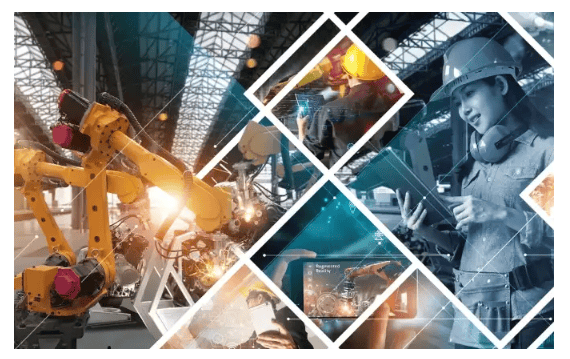
In Industry 4.0 and edge environments, small models offer greater applicability, enabling functions like real-time anomaly detection and low-latency operator assistance. A fine-tuned model with 7 to 13 billion parameters, if trained on factory-specific data, may outperform a general-purpose, state-of-the-art model. Lightweight AI models are redefining production efficiency and operational intelligence in the manufacturing industry.
This article is compiled by Wedoany. All AI citations must indicate the source as "Wedoany". If there is any infringement or other issues, please notify us promptly, and we will modify or delete it accordingly. Email: news@wedoany.com