en.Wedoany.com Reported - SYNAOS, an intelligent intralogistics software provider, recently entered a strategic partnership with OTTO, a company under Rockwell Automation, to accelerate the application of mobile robot interoperability technology. This marks a significant advancement in the promotion of the VDA 5050 interoperability standard in the North American market, as multi-vendor automation is becoming an industry trend.
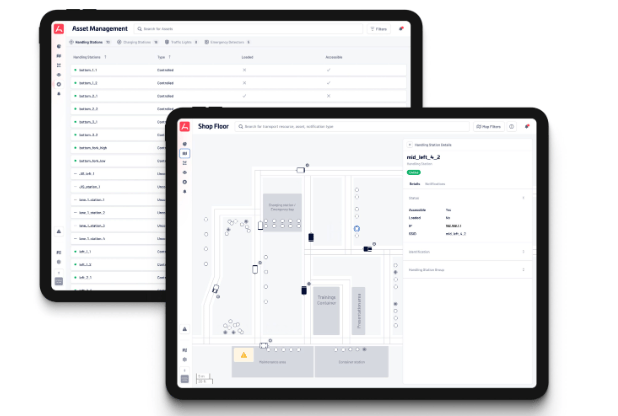
Following a rigorous onboarding process, the OTTO 100, OTTO 600, OTTO 1200, and OTTO 1500 Autonomous Mobile Robots (AMRs) have been certified for the SYNAOS Intralogistics Platform. This integration enables manufacturers and logistics providers to seamlessly manage OTTO robots alongside other VDA 5050-compliant equipment, including vehicles and forklifts, within a centralized system.
As industrial facilities deploy diverse robotic solutions to meet workflow demands, standardized, vendor-agnostic fleet management is becoming increasingly critical. SYNAOS IMP addresses this challenge by optimizing routes, preventing deadlocks, and dynamically allocating tasks.
Dr. Philipp Schäfers, Head of Partner Management & Business Development at SYNAOS, stated: "The integration of OTTO AMRs into our ecosystem validates the growing application of the VDA 5050 standard globally, particularly in North America. By combining OTTO's hardware with our orchestration capabilities, customers can select robots based on their needs while maintaining centralized control and operational efficiency."
Jay Judkowitz, Director of AMR Product Development at OTTO by Rockwell Automation, noted: "Manufacturers increasingly require interoperability solutions as they scale their mobile robot applications. Our commitment to open standards like VDA 5050 embodies the philosophy of an open ecosystem. Partnering with SYNAOS enhances our customers' flexibility in managing diverse robotic fleets."
This collaboration aligns with the vision for industrial automation to evolve towards open, interoperable ecosystems where different technologies can work together without the need for custom interfaces. This approach reduces integration complexity and cost, enabling companies to advance their automation initiatives more rapidly.
This article is compiled by Wedoany. All AI citations must indicate the source as "Wedoany". If there is any infringement or other issues, please notify us promptly, and we will modify or delete it accordingly. Email: news@wedoany.com