China's General Administration of Customs Opens Market to Coffee Beans from 53 African Countries, Full Phytosanitary Access Starting July 20
en.Wedoany.com Reported - On May 27, the head of the Department of Animal and Plant Quarantine of the General Administration of Customs stated that starting July 20, China will allow coffee beans that meet the requirements from 53 African countries with which it has diplomatic relations to be exported to China. This market access for coffee beans is another agricultural product to achieve full phytosanitary access among African countries with diplomatic relations, following dried chili peppers. The relevant requirements are implemented in accordance with GAC Announcement No. 68 of 2026.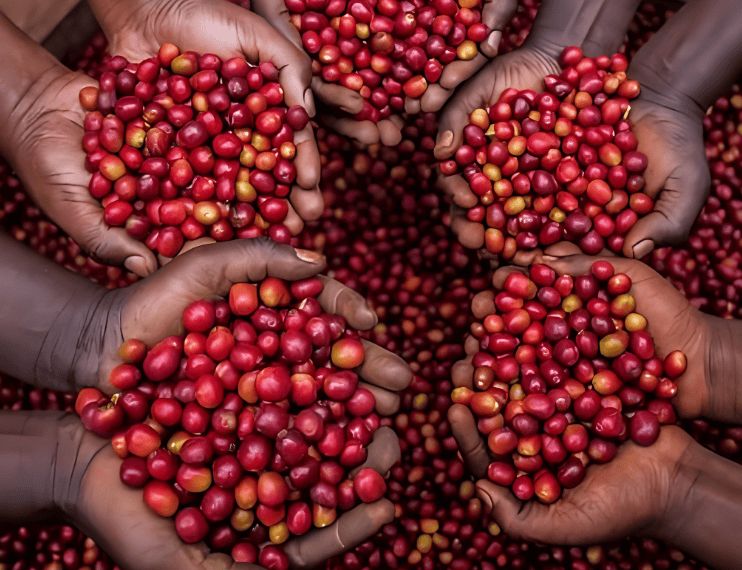
Coffee beans are a specialty agricultural product of Africa and an important export commodity for many countries, including Ethiopia and Burundi. Previously, coffee beans from some African countries had already achieved phytosanitary access to China, while countries such as Mauritius, Angola, Togo, Guinea, Liberia, and São Tomé and Príncipe have successively submitted applications for export to China. With the adoption of unified phytosanitary requirements, eligible coffee beans from African countries with diplomatic relations will no longer need to negotiate phytosanitary requirements or sign separate access agreements with Chinese competent authorities on a case-by-case basis, making the institutional pathway for agricultural products to enter the Chinese market clearer.
The General Administration of Customs has conducted a comprehensive assessment of the cultivation, production, and processing stages of coffee beans in African countries, concluding that the relevant pests, diseases, and risk prevention and control measures for coffee beans in the African region are fundamentally similar. Based on this, unified import phytosanitary requirements have been formulated. These requirements cover aspects such as plantation management, processing enterprise registration, export inspection and quarantine, issuance of phytosanitary certificates, packaging and labeling, and sanitary conditions of transportation vehicles, ensuring that access facilitation and port safety supervision are advanced simultaneously.
"Full phytosanitary access" addresses the issue of whether African coffee beans can enter the Chinese market and is not equivalent to exemption from inspection at customs clearance. Subsequently, African countries with diplomatic relations intending to export to China must still comply with the requirements of GAC Announcement No. 68, and relevant production and processing enterprises also need to be incorporated into the registration and supervision system. For importers and supply chain enterprises, after the scope of access is expanded, attention must still be paid to specific implementation requirements such as origin, processing enterprise qualifications, phytosanitary certificates, packaging and labeling, sampling inspections, and port inspections.
This policy will bring a more direct effect of category expansion to China-Africa agricultural trade. China's coffee consumption market continues to grow, with increasing demand for coffee beans from diverse origins in specialty coffee, ready-to-drink coffee, roasting retail, and food service channels. African coffee is distinctive in terms of flavor characteristics, origin stories, and supply diversity. With unified access, more African origins have the opportunity to enter the procurement systems of Chinese importers, roasting enterprises, chain coffee brands, and food processing enterprises.
For African agricultural exporting countries, the facilitation of phytosanitary access helps to increase the added value of agricultural products and expand trade channels. The coffee industry connects farmers, primary processing enterprises, exporters, logistics enterprises, and local employment. After entering the Chinese market, relevant countries can enhance their export capabilities through quality control, standardized processing, traceability systems, and brand building. For the Chinese market, the entry of more African coffee beans will also enrich raw material sources, enhance supply chain resilience, and provide consumers with more choices of origin.
Subsequent implementation will focus on aspects such as the organization of registration by competent authorities in African countries, pre-export inspection and quarantine, corporate compliance training, port inspection coordination, and procurement matching by Chinese importers. The opening of China's General Administration of Customs to coffee beans from 53 African countries that meet the requirements indicates that the "green channel" for African agricultural and food products exported to China is shifting from single-country, single-agreement access to a broader arrangement of unified phytosanitary access.
This article is compiled by Wedoany. All AI citations must indicate the source as "Wedoany". If there is any infringement or other issues, please notify us promptly, and we will modify or delete it accordingly. Email: news@wedoany.com
Related Products



714CD Series C-Band Weather Radar
Chengdu Zhongdian Jinjiang Information Industry Co., Ltd.
4HS-8 High-efficiency Peanut Inverted-laying Harvester
Hebei Yongfa Hongtian Agricultural Machinery Manufacturing Co., Ltd.

Industrial and Commercial Point-Type Gas Detector
Jinan Benan Technology Development Co., Ltd.