Zoomlion Plans to Achieve R$500 Million in Sales in Brazil by 2026 and Establish a Factory
en.Wedoany.com Reported - Zoomlion plans to achieve R$500 million in sales of Brazilian agricultural machinery by 2026 and is studying the construction of a local factory within the next few years, thereby accelerating its layout in the Brazilian agricultural market. As a Chinese tractor giant and one of the world's largest heavy machinery manufacturers, the company is exerting greater pressure on traditional agricultural giants after participating in major industry exhibitions, building a dealer network, and investing in after-sales service.
This comes at a time when the Brazilian agricultural mechanization market is undergoing profound changes. Traditional manufacturers face challenges from shrinking sales, high interest rates, and increasingly cautious farmers, while Chinese and Indian brands are accelerating their market share gains with more competitively priced machines, embedded technology, and aggressive business strategies. The pace of Asian companies is no longer just the entry of new competitors but is beginning to change the historical landscape of Brazil's agricultural machinery industry.
China's participation in Brazil's agricultural sector is no longer fragmented. Zoomlion made its official debut at the Agrishow exhibition, showcasing a tractor series covering 75 to 350 horsepower, with one model particularly eye-catching—a high-power hybrid tractor promoted as the largest of its kind globally. According to company executives, the manufacturer has already launched hybrid models with up to 700 horsepower in other markets, using a combined diesel and electric system. The manufacturer's strategy is clear: not content with offering a cheaper alternative, it aims to position itself as an advanced agricultural technology enterprise. For years, Chinese machines in Brazil were often associated with simplicity and low durability; now, Asian companies are trying to reshape their image through embedded electronics, precision agriculture, energy efficiency, connectivity, lower fuel consumption, and structured after-sales service.
The economic situation has fueled the speed of this expansion. Amid high interest rates, tightened rural credit, and pressured profits across multiple industry chains, many producers have begun seeking more competitive alternatives. Industry data shows that Brazil imported over 11,000 agricultural machines in 2025, with China contributing approximately 3,900 units, representing a sales increase of nearly 86%. In the first quarter of 2026, total imports grew by more than 48%, marking a structural shift in Brazil's agricultural mechanization driven by the advance of Asian companies. Besides Zoomlion, other Chinese brands such as Lovol, YTO, and XCMG are also expanding their influence in Brazil.
While price remains an important attraction, Chinese brands also recognize that relying solely on low prices is unsustainable; technical service and parts supply are the aspects farmers are most sensitive to. Zoomlion confirmed it will invest in establishing a large parts distribution center in Indaiatuba (SP) and plans to start local assembly operations in CKD (Completely Knocked Down) format. This move aims to reduce logistics costs, speed up repairs, and eliminate the risk of long waits for imported parts. At the same time, another key aspect of the Chinese strategy is adapting machines to Brazilian conditions. The first year of operation serves as a phase for intensive testing and technical adjustments, including wheel alignment, workstation adaptation, operational adjustments, performance in tropical soils, and high-intensity work performance.
The boldest step is yet to come. Zoomlion is negotiating with state governments to build a factory in Brazil within the next four years, with candidate locations including the states of Goiás, Minas Gerais, and Santa Catarina. The plan will be implemented in phases, with initial annual production expected to be around 1,000 machines. Local production can reduce costs, enhance competitiveness, facilitate credit financing, and expand market influence. The advance of Chinese manufacturers also simultaneously expands their influence on global chains related to food, energy, and technology, involving agricultural technology, connectivity, precision agriculture, electrification, energy efficiency, and industrial control. Zoomlion claims its equipment can save 30% to 50% in fuel, a factor of great relevance in an era of high field costs.
Despite the advance of Asian companies, traditional manufacturers such as John Deere, Massey Ferguson, Valtra, and New Holland still dominate the Brazilian market, especially in the fields of precision agriculture and high-horsepower machines. However, industry perception has changed rapidly, with Chinese brands occupying tangible space in the attention of agricultural exhibitions, dealers, and Brazilian producers. Against the backdrop of tight credit and growing demand to reduce operating costs, many producers are beginning to try new brands and models. The Chinese offensive has not yet achieved absolute market dominance, but it has profoundly altered the competitive dynamics, moving from compact equipment towards high-horsepower tractors, hybrid machines, local production, and technological competition, marking one of the greatest transformations in Brazilian agricultural mechanization in recent decades.
This article is compiled by Wedoany. All AI citations must indicate the source as "Wedoany". If there is any infringement or other issues, please notify us promptly, and we will modify or delete it accordingly. Email: news@wedoany.com
Related Products
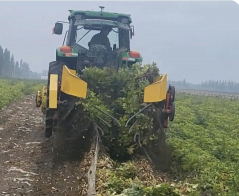

4HS-8 High-efficiency Peanut Inverted-laying Harvester
Hebei Yongfa Hongtian Agricultural Machinery Manufacturing Co., Ltd.
714CD Series C-Band Weather Radar
Chengdu Zhongdian Jinjiang Information Industry Co., Ltd.
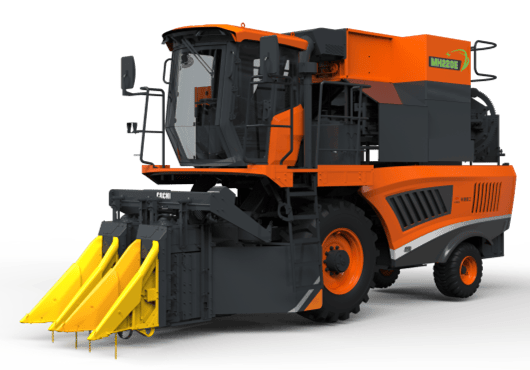
MH220E Two-Row Hybrid Packaged Cotton Picker
CHINA RAILWAY CONSTRUCTION HEAVY NDUSTRY XINJIANG CO., LTD.
Industrial and Commercial Point-Type Gas Detector
Jinan Benan Technology Development Co., Ltd.