Sherpa Design Combines Additive Manufacturing and CNC Machining to Manufacture Critical Components for Underwater Vehicles
en.Wedoany.com Reported - The Monterey Bay Aquarium Research Institute (MBARI) has made progress in improving the integration of biological sampling systems for Autonomous Underwater Vehicles (AUVs). The institute's Environmental Sample Processor (ESP) requires a complex fluid manifold that serves as the core component of the robotic laboratory. This manifold must feature 60 dual ports and withstand pressures of 500 psi. In the search for an alternative to traditional brittle resin solutions, MBARI ultimately selected Sherpa Design, based in Oregon, USA, to complete the manufacturing using a combined approach of additive manufacturing and precision machining.
For material selection, Sherpa Design chose Carbon's EPX 150 resin. This material stood out due to its good machinability, resistance to coolants, and compatibility with specific cleaning agents. Considering the complexity of the internal fluid channels in the manifold and the stringent tolerance requirements for the threads, a single 3D printing technology was insufficient to fully meet the specifications. To address this, the team developed a hybrid workflow: first, additive manufacturing was completed using Carbon's Digital Light Synthesis (DLS) technology, followed by precision finishing via 5-axis CNC machining.
The final manufacturing ratio was determined to be 75% additive manufacturing combined with 25% CNC finishing. Through a series of precision operations such as drilling, reaming, and T-slot cutting, the concentricity and sealing of the fluid ports were ensured. Pat Barrett, owner of Sherpa, emphasized that this solution relies on close collaboration between additive experts and machinists, which is a unique advantage when tackling complex engineering challenges.
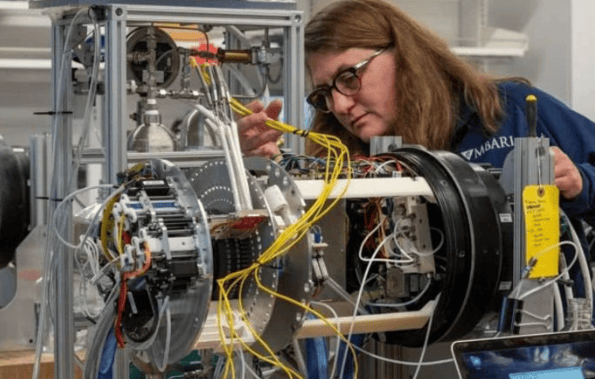
The completed component has passed a 500 psi static pressure test at MBARI and has been officially installed on a Long-Range Autonomous Underwater Vehicle (LRAUV) for field trials. The successful application of this custom component ensures that scientific instruments can stably collect environmental data even under challenging ocean conditions. Through the deep integration of additive manufacturing technology with traditional subtractive machining, this project provides an efficient and highly reliable technical pathway for manufacturing components for high-end marine exploration equipment.
This article is compiled by Wedoany. All AI citations must indicate the source as "Wedoany". If there is any infringement or other issues, please notify us promptly, and we will modify or delete it accordingly. Email: news@wedoany.com
Related Products


LBH4000 Batch Environmental Protection Asphalt Mixing Plant | Asphalt Batching Plant | Asphalt Mixing Plant
Jilin Province Road Construction Machinery Co., Ltd.
Strip Coating and Plating Production Line Equipment
MCC-SFRE HEAVY INDUSTRY EQUIPMENT CO., LTD.
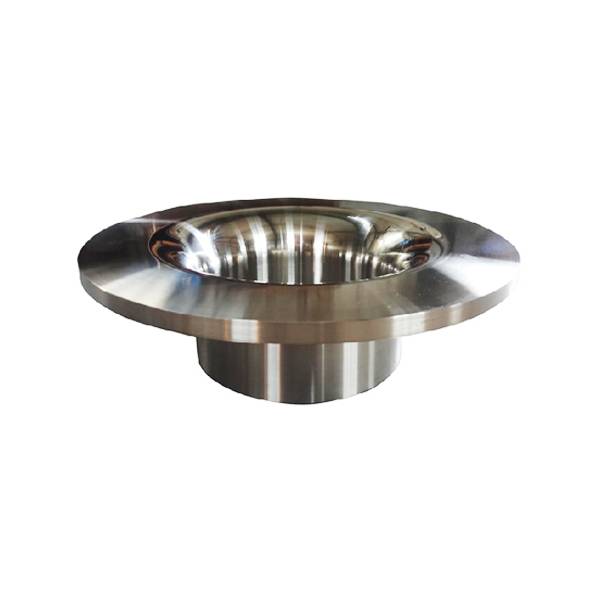
Standard Nozzle Flowmeter
Jinggong Automatic Control Instrument Complete Technology Development Company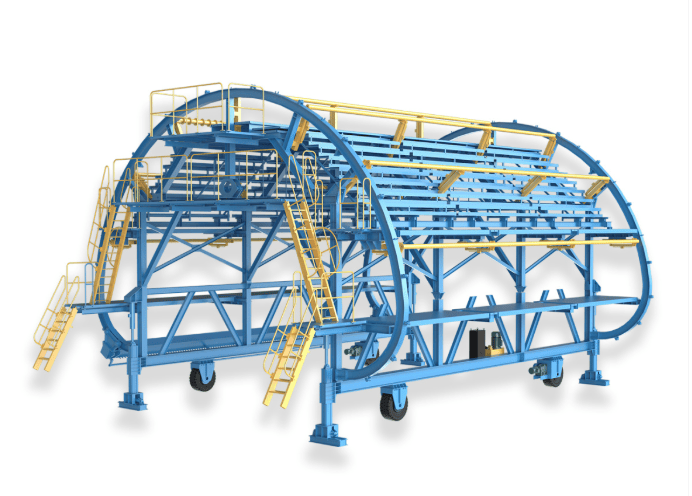
QLZNGJ Intelligent Steel Reinforcement Trolley
Luoyang China Railway Qiangli Machinery Co., Ltd.