en.Wedoany.com Reported - On June 1st, news from the WeDoAny Going Global Daily in the transportation and logistics sector indicates that the global transportation infrastructure and cross-border logistics market is shifting from expanding single-mode transport capacity to a parallel advancement of "green ships, cross-border multimodal transport, international aviation networks, smart ports and shipping, maritime finance, and overseas highway and ferry infrastructure." Chinese shipbuilding, port technology, smart logistics, engineering contracting, transportation equipment, and supply chain service enterprises are facing more complex but structurally richer opportunities for going global: on one hand, overseas project tenders, infrastructure financing, and regional transportation upgrades provide engineering entry points; on the other hand, the greening of shipping, adjustments in aviation capacity, sea-rail intermodal transport, and smart port construction impose higher requirements on technology, standards, operations, maintenance, and localized cooperation.
I. Key News Summary
1. China's State Council Regulations on Outbound Investment to Take Effect in July 2026
Core Content: The State Council Regulations on Outbound Investment will take effect on July 1, 2026. The regulations establish institutional arrangements for outbound investment services, management, protection, and risk prevention, explicitly supporting enterprises in conducting overseas investments in accordance with laws and regulations, and improving the service system covering legal, financial, tax, logistics, entry-exit, customs, policy-based insurance, and dispute resolution aspects.
Going Global Watch: Transportation and logistics projects typically involve ports, roads, railways, airports, warehousing, and cross-border logistics networks, characterized by long investment cycles and complex local compliance. After the new regulations are implemented, Chinese transportation engineering, logistics, and equipment enterprises going global need to incorporate investment filing, financing insurance, local laws and regulations, data security, labor responsibilities, and emergency mechanisms into the preliminary project plan, rather than focusing solely on engineering quotations and equipment delivery.
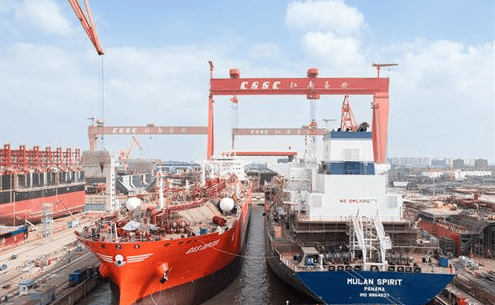
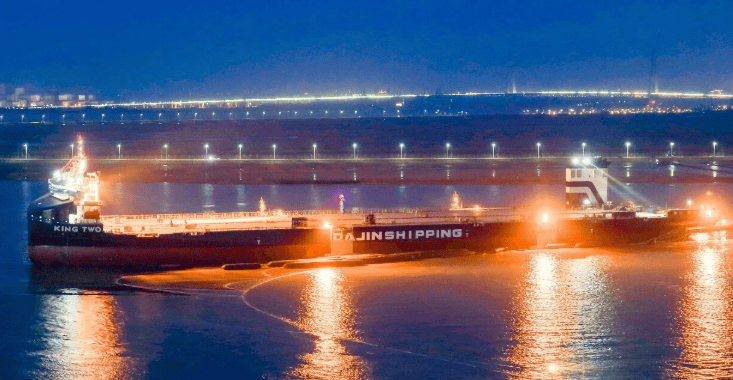
2. Dajin Heavy Industry Signs $300 Million Bulk Carrier Construction Contract with Norwegian and Greek Shipowners
Core Content: Dajin Heavy Industry and Tangshan Dajin Offshore Engineering signed contracts with a Greek shipowner and a Norwegian shipowner for the construction of four 211,000 DWT bulk carriers. The total contract value is approximately $300 million, equivalent to about RMB 2.05 billion, with the vessels scheduled for phased delivery in 2029. Each vessel has an overall length of approximately 299.95 meters, a beam of 50 meters, and a depth of 25 meters.
Going Global Watch: This news directly demonstrates the capability of Chinese marine engineering and shipbuilding enterprises to undertake orders from international shipowners. For enterprises involved in ship components, offshore steel structures, main and auxiliary engines, outfitting parts, deck machinery, intelligent navigation systems, and green ship technology, international shipowner orders represent not only manufacturing export opportunities but also a test of their ability to manage exchange rates, long-cycle delivery, classification society certification, and international after-sales service.
3. China Classification Society and Shandong Marine Group Sign Strategic Cooperation Agreement
Core Content: China Classification Society (CCS) and Shandong Marine Group signed a strategic cooperation agreement in Jinan. The two parties will deepen cooperation in areas such as technical standards, green and low-carbon transformation, safety production control, ships and offshore facilities, port construction, and management systems, serving the green and intelligent transformation of the shipping and shipbuilding industries.
Going Global Watch: Although this cooperation takes place domestically, it points towards building capabilities in greening, standardization, and safety compliance for ships, offshore engineering, ports, and shipping systems. When Chinese enterprises participate in overseas shipping, port, offshore equipment, and ship projects, classification society certification, green and low-carbon standards, and safety management systems will become important thresholds for entering the international market.
4. China's Hunan Province Plans to Cultivate 20 Premium Multimodal Transport Routes
Core Content: Hunan Province released the "Implementation Plan for Strengthening Foundations, Shoring Up Weaknesses, and Promoting Development in Multimodal Transport," planning to focus on four major areas: international openness, strategic materials, advanced manufacturing, and regional collaboration, with the goal of cultivating 20 premium multimodal transport routes. These include the Changsha-Zhuzhou-Xiangtan to Global "Air-Road Transport," Changsha-Zhuzhou-Xiangtan to Eurasia "China-Europe/Central Asia" high-end equipment multimodal transport, Huaihua to ASEAN cross-border railway, "Hunan-Guangdong-Africa" rail-sea intermodal transport, and Yueyang Chenglingji to Global river-sea direct routes for automobiles and parts.
Going Global Watch: Hunan's multimodal transport plan connects the inland manufacturing base with Eurasian, ASEAN, African, and global markets, indicating that China's inland regions are enhancing their outward-oriented logistics capabilities through a combination of rail, air, water, and sea transport. For enterprises exporting engineering machinery, high-end equipment, auto parts, and new energy equipment, cross-border multimodal transport capabilities will directly impact delivery efficiency and the stability of fulfilling overseas orders.
5. Guangzhou-Urumqi-Frankfurt Route Officially Launched on June 1st
Core Content: The Guangzhou-Urumqi-Frankfurt route officially commenced operations on June 1st, making it the first intercontinental passenger route from Northwest China directly to Germany. The route is operated by a Boeing 787-9, with flights every Monday and Friday, offering nearly 600 round-trip seats. The flight time from Urumqi to Frankfurt is approximately 8 hours, saving over 10 hours compared to detours or transfers.
Going Global Watch: The opening of international routes not only serves passenger travel but also helps enhance regional business, exhibitions, cross-border services, and high-timeliness cargo connectivity. With Xinjiang as the core area of the Silk Road Economic Belt, the strengthened air corridor to Europe is expected to improve the efficiency of air logistics, cross-border e-commerce, personnel travel for high-end equipment services, and China-Europe industrial cooperation.
6. India's IndiGo Plans to Return Most of Its Wet-Leased Aircraft
Core Content: India's IndiGo plans to return most of its wet-leased aircraft and reduce the use of older generation aircraft, citing reasons including high fuel prices, airspace disruptions, and a more cautious approach to capacity growth. Its wet-leased fleet includes A320ceo, A321neo, B737, and 787-9 aircraft used for routes to Amsterdam, London, and Manchester. The company maintains its A350-900 order plan and focuses on optimizing long-haul route operations.
Going Global Watch: Although the Indian aviation market has significant growth potential, fuel prices, geopolitical airspace, long-haul route costs, and fleet restructuring are impacting airline operations. For enterprises in aircraft maintenance, aviation material supply, ground handling, airport services, route digitization, and aviation financial services, opportunities and risks coexist in the Indian aviation market, requiring attention to airline capacity adjustments and cost control needs.
7. Angola's TAAG Targets Operational Profitability by 2026
Core Content: Angola's national airline, TAAG Angola Airlines, has designated 2026 as a key year for achieving operational profitability. The company is advancing transformation, operational restructuring, and sustainable growth, facing challenges such as high costs, fuel volatility, tighter regulations, and shortages of aircraft and spare parts. In 2025, the company transported 1.26 million passengers, operated 26 destinations, generated $437 million in revenue, had a fleet of 32 aircraft, and introduced the Boeing 787-9 and Airbus A220-300.
Going Global Watch: The African aviation market is undergoing transformation through fleet renewal, airport hub construction, route expansion, and maintenance capability enhancement. Chinese enterprises in aviation support equipment, airport ground equipment, maintenance training, digital operations, aviation material supply, and airport engineering can focus on the supporting needs arising from the modernization of African airlines and the construction of regional hubs.
8. India's Sagarmala Financial Company Plans to Issue First Blue Bond to Raise Approximately $100 Million
Core Content: India's Sagarmala Financial Company plans to issue India's first blue bond, aiming to raise up to INR 10 billion (approximately $105 million) to expand financing for maritime and coastal infrastructure. The company plans to raise up to INR 100 billion in the future to support projects such as new and existing ports, port last-mile connectivity, shipbuilding, inland waterways, and coastal road networks.
Going Global Watch: India's use of blue bonds to support port and maritime infrastructure construction indicates that maritime finance is becoming an important tool for implementing transportation engineering projects. Chinese enterprises in port equipment, dredging engineering, shore power systems, smart terminals, shipbuilding, and inland waterway transport equipment can focus on opportunities in India's port, coastal corridor, and inland waterway construction.
9. Brazil's Port of Itajaí Plans to Remove a 130-Year-Old Shipwreck at a Cost of $12.8 Million
Core Content: The Port of Itajaí in Brazil has initiated a shipwreck removal project to clear a wreck over 130 years old that is obstructing a critical navigation channel, aiming to deepen the port channel and enhance the passage capability of large vessels. The project is expected to cost $12.8 million. The Port of Itajaí is an important container port in Brazil, and the project is part of its port modernization plan.
Going Global Watch: Port wreck removal, dredging, channel deepening, and port area modernization are key directions for enhancing throughput capacity in Latin American ports. If Chinese enterprises enter such projects, they can focus on niche opportunities in underwater detection, wreck salvage, dredging equipment, channel surveying, port construction, and project safety management.
10. Austrade: Pacific Region Has a Two-Year Project Pipeline of $2 Billion
Core Content: The Australian Trade and Investment Commission (Austrade) estimates that the total project pipeline in the Pacific region over the next two years in energy, water, social infrastructure, and transportation amounts to $2 billion. Relevant platforms will support enterprises in searching for opportunities by country, industry, and project value, and connecting with local partners. There is a supply shortage for civil engineering projects in the $10 million to $50 million range, while larger projects like port upgrades are in early planning stages, with values potentially reaching $180 million.
Going Global Watch: Infrastructure projects in Pacific Island countries may not always be large in scale, but the demand for transport connectivity, port upgrades, roads, bridges, and public service facilities is clear. If Chinese engineering enterprises focus on this region, they need to pay attention to local participation requirements, development finance rules, logistical barriers, and partner selection, and should not simply apply the large-scale EPC project model.
11. Croatia Cancels Two Road Tenders, Shares of Afcons Infrastructure Fall
Core Content: Shares of India's Afcons Infrastructure fell after Croatia canceled tenders for two road projects. The company had previously passed the expression of interest stage for the related projects, and the cancellations have impacted its near-term overseas order visibility. Afcons Infrastructure's business covers marine engineering, highway construction, and metro rail.
Going Global Watch: Overseas transportation infrastructure projects are not guaranteed opportunities just because they enter the tendering stage. Project cancellations, funding arrangements, government changes, and procurement rule adjustments can all affect order finalization. When Chinese engineering companies participate in overseas road, bridge, port, and rail projects, they need to establish mechanisms for project tracking, risk warning, and pre-contract risk assessment.
12. Tender Launched for Swan River Ferry Terminals in Western Australia, Investment of A$107 Million
Core Content: The Government of Western Australia has issued a tender seeking contractors with design and construction capabilities for water infrastructure to build two new ferry terminals at Applecross and Matilda Bay on the Swan River. The total project investment is A$107 million, co-funded by the federal and state governments, with new ferry services expected to commence by the end of 2027. Echo Marine Group has previously been awarded a contract for the design and construction of five new electric ferries, and the terminals will also reserve space for electric ferry charging infrastructure.
Going Global Watch: Urban water transportation is integrating with electric ferries, shore power charging, transfer hubs, and waterfront public transport renewal. Chinese enterprises can focus on opportunities in overseas ferry terminals, water transport facilities, electric vessel support, shore power systems, charging infrastructure, waiting facilities, and intelligent dispatching systems.
13. Victoria State Government in Australia Launches Winter Road Works
Core Content: The Victorian Government in Australia will concentrate on road and rail-related works during winter, starting with level crossing removal projects, and involving multiple road and rail construction nodes including Melton, Newport, the Ballarat Line, the Belgrave Line, the Metro Tunnel, the North East Link, and the Suburban Rail Loop.
Going Global Watch: The Australian transportation infrastructure market continues to release demand for road maintenance, rail upgrades, station modifications, bridge construction, traffic management, and urban commuter improvements. If Chinese enterprises participate in this market, they need to adapt to local safety regulations, construction disturbance management, traffic diversion requirements, and local contracting systems.
14. Construction of Final Bridge Begins on Australia's A$2.2 Billion Coffs Harbour Bypass
Core Content: The A$2.2 billion Coffs Harbour Bypass project in Australia has entered its final phase, with construction commencing on the project's last bridge. This bridge is the final one among the 21 bridges planned for the project and will become a key part of the future Pacific Highway southbound underpass. The 14-kilometer bypass is expected to open to traffic by the end of 2026, with the entire project scheduled for completion by the end of 2027. Once completed, it will bypass up to 12 sets of traffic lights, saving up to 12 minutes of travel time.
Going Global Watch: Large-scale highway bypass, bridge, and traffic diversion projects reflect the sustained investment of developed markets in regional transport efficiency, safety, and freight capacity. For enterprises in bridge equipment, road materials, traffic signals, intelligent transportation systems, and construction machinery, mature overseas markets place greater emphasis on engineering quality, environmental constraints, and lifecycle maintenance capabilities.
15. 2026 China Port Technology Conference Held in Ningbo, Focusing on AI + Port and Shipping Scenario Innovation
Core Content: The 2026 China Port Technology Innovation Conference was held in Ningbo under the theme "Promoting 'AI + Port and Shipping' Scenario Innovation to Build a New Smart Port and Shipping Ecosystem." The conference focused on the integration of AI technology with port and shipping scenarios, covering topics such as smart ports, digital twin waterways, intelligent dispatching, safety supervision, green and low-carbon initiatives, port and shipping large models, automated terminals, and smart multimodal transport.
Going Global Watch: The technical experience China has gained in AI dispatching, automated terminals, sea-rail intermodal transport, digital twin waterways, and smart safety supervision has the potential to serve overseas port upgrades and "Belt and Road" port and shipping projects. However, going global with smart ports cannot rely solely on selling systems; it also requires addressing data standards, port operational processes, local network environments, and long-term operations and maintenance.
II. Global Changes in Transportation and Logistics from the News
First, opportunities in transportation infrastructure are spreading towards "regional small-to-medium projects + specialized engineering." The $2 billion project pipeline in the Pacific, the ferry terminal tender in Australia, road works in Victoria, and the Coffs Harbour Bypass project indicate that overseas transportation engineering opportunities are not limited to mega-EPC projects. Demand is also being released for small-to-medium civil engineering, port upgrades, urban water transport, bridge construction, and road maintenance.
Second, the construction of international logistics corridors is moving from single-mode transport towards multimodal transport systems. Hunan's plan for 20 premium multimodal transport routes, covering directions like China-Europe/Central Asia, ASEAN, Africa, and global river-sea direct routes for auto parts, shows that cross-border logistics competition is shifting towards the comprehensive capability of "rail + water + air + road + port services." In the future, equipment export enterprises need to incorporate logistics solutions as part of fulfilling overseas orders.
Third, opportunities and risks in the aviation market are rising simultaneously. The opening of the Guangzhou-Urumqi-Frankfurt route reflects enhanced China-Europe air connectivity, while IndiGo's adjustment of wet-leased aircraft and TAAG's push for operational profitability highlight the pressures airlines face regarding fuel, airspace, fleets, maintenance, and capital. Enterprises in airport services, aviation materials, MRO, ground equipment, and aviation digitization need to align their strategies with airlines' cost reduction and efficiency improvement needs.
Fourth, the port and maritime industry is moving towards greening, digitization, and financialization. India's blue bond, Brazilian port wreck removal, Australian ferry terminals, China's port AI conference, and the CCS cooperation collectively indicate that the port and shipping sector is simultaneously advancing green fuels, electric vessels, smart ports, standard certification, and diversified financing. Chinese enterprises going global need to possess synergistic capabilities in engineering, technology, finance, and standards.
Fifth, the uncertainty of overseas transportation projects is increasing. The cancellation of road tenders in Croatia serves as a reminder that between expression of interest, prequalification, tendering, and contract signing, overseas projects still face policy, funding, procurement, and market risks. Transportation engineering enterprises need to establish stricter mechanisms for opportunity screening, bid cost control, and project exit.
III. Opportunities for Chinese Enterprises Going Global
1. Shipbuilding and Offshore Engineering Support. Dajin Heavy Industry's bulk carrier contract with European shipowners demonstrates the continued capability of Chinese shipbuilding enterprises to undertake international orders. Related supporting enterprises can focus on marine steel structures, deck machinery, green propulsion, intelligent navigation, classification society certification, and global after-sales service.
2. Cross-Border Multimodal Transport and Supply Chain Services. Hunan's multimodal transport route plan shows that inland regions are forming transport combinations targeting Eurasian, ASEAN, African, and global markets. Logistics companies, park operators, rail freight forwarders, overseas warehouses, and digital logistics platforms can provide comprehensive services for the export of high-end equipment, auto parts, and new energy equipment.
3. Port Upgrades and Waterway Engineering. The Port of Itajaí wreck removal, Indian port financing, and Australian ferry terminal projects indicate sustained demand for port wreck removal, dredging, terminal construction, shore power charging, intelligent dispatching, and water transport facilities. Chinese port machinery, dredging, channel surveying, and smart port enterprises can focus on these areas.
4. Overseas Road, Bridge, and Urban Transport Engineering. Multiple road, bridge, and ferry projects in Australia show that developed markets still have significant demand for transport renewal. Chinese enterprises can enter through engineering materials, bridge components, construction machinery, intelligent transportation, road safety facilities, and project management services, but must meet local contracting qualifications and safety standards.
5. Aviation Transport Support and Airport Services. Aviation news from India and Angola reflects demand for fleet renewal, capacity adjustment, maintenance capabilities, aviation material supply, and airport hub construction. Chinese enterprises can focus on airport ground equipment, MRO tools, training systems, aviation material supply chains, airport information systems, and green airport equipment.
6. Smart Port and AI Port & Shipping Solutions. The China Port Technology Conference signals technology export opportunities in port AI, digital twins, intelligent dispatching, unmanned trucks, multimodal transport, and safety supervision systems. When going global, relevant enterprises should shift from single software delivery to "system integration + operations & maintenance training + data governance + localized adaptation."
7. Transportation Infrastructure Investment, Financing, and Risk Services. India's blue bond and the Pacific region project pipeline illustrate that transportation engineering projects increasingly rely on development finance, green finance, export financing, and local partnerships. Chinese enterprises need to collaborate with banks, insurance companies, law firms, consulting agencies, and local contractors, rather than bidding alone.
IV. Industry FAQ
Q1: Why can't transportation and logistics enterprises going global focus only on large port and railway projects?
A: Because overseas opportunities are dispersing towards small-to-medium civil engineering, ferry terminals, road maintenance, bridge construction, channel wreck removal, airport services, and smart port systems. Small-to-medium projects test local cooperation, cost control, and rapid delivery capabilities more.
Q2: What should Chinese shipbuilding enterprises pay most attention to when undertaking international orders?
A: Besides manufacturing capability, attention must be paid to classification society certification, contract currency, long-cycle delivery, supply chain stability, environmental requirements, after-sales service, and international shipowner credit management. Ship orders involve large amounts and long cycles; exchange rate and performance risks cannot be ignored.
Q3: What is the practical value of multimodal transport for Chinese equipment export enterprises?
A: Multimodal transport can improve delivery stability, reduce reliance on single routes, and enhance the cross-border transport efficiency of goods like high-end equipment, engineering machinery, auto parts, and new energy equipment. Export enterprises should front-load logistics route planning into the order stage.
Q4: What does India's blue bond mean for port equipment enterprises?
A: It indicates that India's maritime infrastructure construction is introducing more specialized financing tools. Port equipment, shore power, smart terminals, shipbuilding, inland waterways, and coastal road projects may receive more financial support, but enterprises need to be familiar with financing rules and procurement processes.
Q5: Is the cancellation of overseas road project tenders common? How should enterprises respond?
A: Overseas projects are affected by fiscal, political, approval, environmental, and procurement rules; cancellations or delays are not uncommon. Enterprises should assess funding sources, owner credit, procurement stability, and contract conditions before bidding, and control upfront investment costs.
Q6: What are the key difficulties for smart port technology going global?
A: The difficulties are not just the technology itself, but also differences in port operational processes, data interfaces, communication networks, personnel training, system maintenance, and safety supervision requirements. Enterprises need to provide sustainable operations & maintenance and localized adaptation solutions.
Q7: Which Chinese enterprises should focus on the African aviation market?
A: Enterprises in airport ground equipment, maintenance training, aviation material supply, airport information systems, passenger and cargo dispatching, security equipment, and green airport facilities can all pay attention. The transformation of African airlines is typically accompanied by demand for fleet renewal, airport hub construction, and operational efficiency improvement.
This article is compiled by Wedoany. All AI citations must indicate the source as "Wedoany". If there is any infringement or other issues, please notify us promptly, and we will modify or delete it accordingly. Email: news@wedoany.com